When markets never close: A Q&A with Binance’s Shunyet Jan
This conversation, pulled from a July 22nd fireside chat between our Head of Research, Ryan Calej, and Binance’s Head of Exchange & Trading, Shunyet Jan on X, followed the release of our latest Binance report, From Exchange to Infrastructure: How CEXs Are Reshaping Global Market Access.
Binance
Q&A format focused on the financial super app vision, inclusivity and access, 24/7 trading, and price discovery.
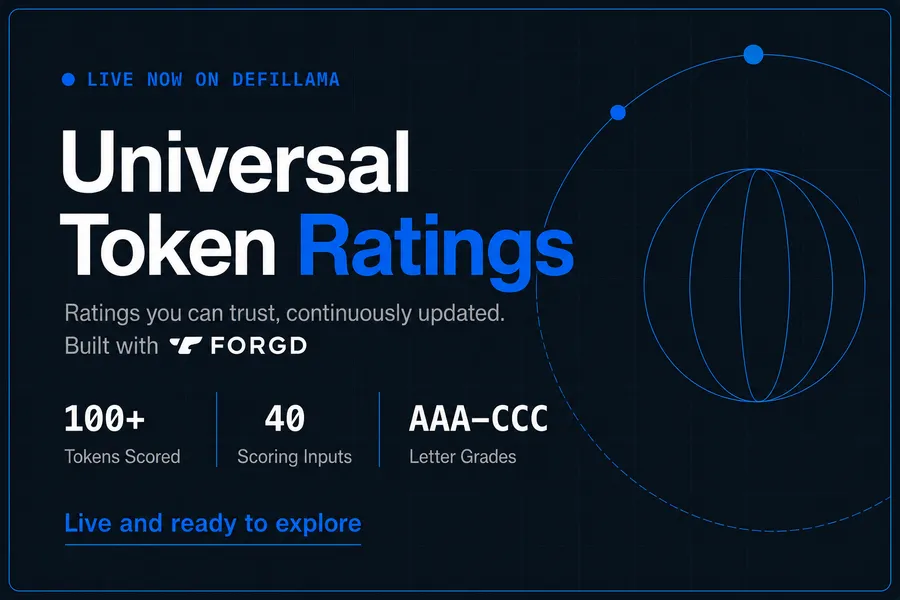
Shunyet Jan spent the years before crypto on Wall Street, going back to the 1990s. He joined Binance in December 2025, and now oversees everything trading-related on the exchange, from spot and perpetuals to bStocks, Binance's tokenized equities product.
This conversation, pulled from a July 22nd fireside chat between our Head of Research, Ryan Calej, and Binance’s Head of Exchange & Trading, Shunyet Jan on X, followed the release of our latest Binance report, From Exchange to Infrastructure: How CEXs Are Reshaping Global Market Access. It covers four threads from that report: Binance’s financial super app vision, and Shunyet’s thoughts on access and inclusivity, 24/7 markets, and price discovery.
Binance’s financial super app vision
- Binance started as a place to trade crypto. What's changed most fundamentally about the role exchanges play for users today?
Users first came to Binance to swap one crypto for another. Stablecoins were the next big shift, turning "stable to volatile" into a routine conversion. Perpetuals came after that: a 24/7 asset class that aggregates liquidity into a single instrument tracking spot price, instead of the month-by-month contracts TradFi futures markets are built around.
From there, the pattern repeated. Users didn't just want to only trade anymore. They wanted to make payments and get access to other asset classes, and exchanges had already built the infrastructure, 24/7 trading, instant settlement, cross-margining, to support it. Competitors that started in TradFi are now moving into crypto, and Binance is moving the other way, into TradFi assets and payments. Everyone is converging on the same goal: users who used to need three or four different apps now want one.

- Is growth going to come more from the sheer number of assets you list, or from integrations on the collateral and settlement side, letting people use these assets as collateral for trading?
Both. Binance has started testing letting TradFi assets be used as collateral to trade other TradFi assets or crypto derivatives, and is working with regulators to expand that carefully. But the growth driver nobody's really talking about is a different one: wealth management. US equities are a massive asset class partly because there's an entire industry of mutual funds and hedge funds managing that money for people. Crypto doesn't have that. Strip out Bitcoin, Ethereum, Solana, and BNB, and there isn't much diversification left, and there isn't much of an industry helping users manage what they hold.
Vaults exist today, but only for crypto assets. Tokenizing an ETF is close to tokenizing a fund, but most ETFs are index products, meaning passive management. Active management, and asset managers who actually understand both crypto and TradFi, are rare. Most global managers stick to one jurisdiction or one asset class. Whether the answer ends up being vaults, or opening access to third-party asset managers, isn't settled yet. But asset management is the piece that's still missing.
- Do you see the line between "crypto exchange" and "TradFi exchange" blurring, to the point where CEXs eventually do as much TradFi volume as crypto volume?
The broader asset market, equities and fixed income, is much bigger than crypto. Nvidia alone is bigger than the entire crypto market combined. CEXs took the lead on 24/7 trading and cross-margining, and that advantage is going to pull volume toward normalization based on market cap. It's plausible that half of Binance's volume eventually comes from TradFi assets.
Right now, most of that TradFi exposure is US-centric. But demand isn't only for US assets: users in the US may want access to Korea, users in Africa may want access to Hong Kong. Getting a brokerage account outside your home jurisdiction is hard even if you live in a developed country. CEXs are positioned to be the first to open that up broadly.
Inclusivity and access, 24/7 trading, and price discovery
- Tokenized stocks have been tried before. Why is this the year it's actually taking off?
Regulatory clarity is the biggest factor. Earlier attempts at tokenizing equities were a good first effort, but they missed pieces of what users actually wanted. The newer generation of products, bStocks included, fills those gaps. That coincided with a market backdrop where the hype and growth in TradFi, especially around AI and the hyperscalers, gave people an additional reason to want in.
- Is that demand retail-driven, and if so, why?
Very much so, and very inclusive. A lot of bStocks volume is in small, fractional positions starting at $5. Opening a brokerage account isn't hard if you live in a developed country. Most of the world doesn't have that option. Stablecoins already proved the model: they made the US dollar available globally, and that same rail now makes other assets easy to access too. Historically, buying Nvidia or Microsoft meant needing a US bank account, US dollars, and a brokerage account, three things that are simply not available to most of the world's population. Tokenized stocks, through CEXs and DEXs alike, open that door.
- How important is round-the-clock access, versus the five-day trading week TradFi users are used to?
It shows up on both the derivatives side and the equities side. Hyperliquid's volume is now roughly 40% TradFi perps. Binance has followed the same curve: TradFi volume on its perp market was at zero in January and is around 30% today. TradFi itself hasn't caught up, because it hasn't built the rails for 24/7 trading. CEXs and DeFi both have, and the volume is the proof that the demand was always there. A meaningful share of bStocks volume happens outside US trading hours, when TradFi markets are simply closed.
- Do the same users trade both bStocks and crypto, or do they stay in separate lanes?
There's a lot of overlap. Binance's users tend to track the news closely, and this year that's meant AI, which has driven both the TradFi equity rally and a lot of crypto activity. Users interested in one tend to be interested in the other.
- As Binance expands into commodities, ETFs, and equities, what needs to be true for those markets to have deep, reliable liquidity?
Binance is already the price setter for crypto spot and crypto perpetuals: in leader-laggard terms, when the market moves, it tends to start on Binance, even with roughly 50% market share. That isn't true yet for TradFi assets during normal trading hours, but it flips on weekends. When TradFi markets are closed, and something moves markets, a geopolitical event, a company announcement, Binance and a handful of competitors become the price setters, simply because they're the only venues open.
The bigger structural piece is Direct Equities, a product that sources real US liquidity directly and lets users tokenize it for free. That solves the liquidity question during regular trading hours: if size isn't available on Binance, it can be sourced through TradFi channels and tokenized on demand. On weekends, when TradFi liquidity isn't accessible at all, Binance's own order book is the liquidity, and it holds that position by default.