From Exchange to Infrastructure: How CEXs Are Reshaping Global Market Access
CEXs are therefore evolving beyond trading venues into integrated access and infrastructure layers connecting multiple asset classes, financial products, settlement systems, and onchain applications for both retail and institutional participants.
Binance
Executive summary
Centralized crypto exchanges have evolved from simple marketplaces for digital assets into integrated financial platforms combining trading, payments, lending, yield products, custody, and institutional services. As traditional assets move onchain and the boundary between crypto and traditional finance becomes less distinct, CEXs are positioned to take another step: becoming integrated access and infrastructure layers through which users and institutions can move between asset classes, settlement systems, and onchain applications.
This report examines that transition. Its central argument is not simply that CEXs are winning a competition for trading volume, but that the infrastructure they built for crypto is increasingly being extended across digital finance. Liquidity and price discovery are the foundation of this evolution: they make it possible to introduce new assets, provide efficient execution, and connect trading with custody, collateral, stablecoin settlement, and onchain utility within one environment.
The first section examines why CEXs are well positioned to lead the convergence between crypto and traditional finance. Traditional markets remain constrained by fixed trading hours, fragmented licensing, layered intermediaries, and slower settlement. CEXs already operate continuously, settle through digital rails, serve globally distributed users, and combine multiple financial services through a single account. Exchanges are now extending that infrastructure through different strategies: Kraken acquired a tokenized-equity issuance layer, Coinbase positioned itself as the “Everything Exchange,” while Binance expanded across stock and ETF access, stock-linked perpetuals, bStocks, and institutional collateral integrations.
The second section explains the liquidity foundation supporting that expansion. CEXs still account for roughly 85% of global spot volume and 90% of perpetual volume despite the growth of DEXs and regulated crypto products. Binance provides the clearest illustration of how concentrated flow translates into market quality: its average liquidity within 1% of the BTC perpetual mid-price reached $536 million in 2025, 2.6 times OKX and more than five times Bitget. Academic research also found that Binance led ETH price discovery across five major market events in 2025. CEXs therefore provide more than access: their depth allows users to trade with lower slippage and institutions to execute, hedge, and rebalance large positions efficiently.
The third section asks whether this infrastructure is beginning to extend to tokenized assets. Early evidence suggests that it is, although the market remains nascent. Tokenized gold generated $90.7 billion in spot volume during Q1 2026, with CEXs handling most activity, while the majority of xStocks’ $25 billion in cumulative volume was matched on centralized order books rather than onchain. RWA perpetual volume reached $524.8 billion during the same quarter, with CEXs retaining roughly 80% of activity and Binance accounting for 55.7% of CEX volume. Institutional integrations involving Franklin Templeton, BlackRock’s BUIDL, and Standard Chartered also show tokenized assets being connected to exchange-based collateral and capital-deployment systems.
The final section considers the risks to this trajectory. Tokenized securities remain subject to fragmented regulation, reliance on external issuers introduces operational and counterparty risk, and DEX competition continues to grow. Exchanges are also expanding simultaneously across brokerage, derivatives, custody, collateral, and DeFi integrations, creating considerable execution complexity and compounding risk.
The more important development is what this liquidity now enables. It allows users to fund accounts with stablecoins, move between crypto and traditional assets, access listed and pre-IPO exposure, deploy assets as collateral, and transfer selected products into self-custody or DeFi. CEXs are therefore evolving beyond trading venues into integrated access and infrastructure layers connecting multiple asset classes, financial products, settlement systems, and onchain applications for both retail and institutional participants.

Introduction
Ten years ago, centralized crypto exchanges were niche infrastructure for a niche asset class. Today, they process trillions of dollars in monthly volume, hold hundreds of billions in user assets, and have become the venues where the price of the world's most-traded digital assets is formed.
That transformation didn't happen by accident. It’s the result of infrastructure investment, flow concentration, and increasing liquidity depth, a compounding process that turned a handful of exchanges into the places where crypto price is discovered and where global trading activity concentrates.
The same dynamic is now beginning to play out for TradFi assets. With tokenized stocks, commodities, ETFs, and pre-IPO instruments moving onchain, centralized exchanges are applying the same formula they used for digital assets, becoming more relevant than traditional brokers for these asset classes.
This report examines that evolution across three dimensions. First, why the convergence between TradFi and crypto is real and why CEXs are structurally better positioned to lead it than traditional exchanges. Second, how CEXs built their position in crypto markets through spot concentration, derivatives leadership, order book depth, and price discovery. Third, whether the same conditions are beginning to replicate for tokenized assets, what the early data shows, and what it doesn't yet prove.
The evidence across all three points in the same direction: a new map of global trading is being drawn, and centralized exchanges are leading it.
TradFi and Crypto are converging and CEXs are leading it
Traders are facing structural limitation in TradFi
Traditional financial markets were designed for a world where information traveled slowly, physical proximity was needed, and settlement required time to verify. Despite notable digital evolution and broad access to the internet, their infrastructure is still in place today: trading windows that close at the end of a business day, several intermediaries that add layers of fees, and long settlement cycles.
On top, jurisdiction fragmentation creates friction: a broker licensed in a country can’t automatically serve clients in another, and the licensing process in each new market is a separate, approval-dependent undertaking.
The issue for traditional financial infrastructure is that blockchain technology and the exchanges built on top of it have now spent nearly a decade solving each of these problems from scratch, and the gap between the two worlds is narrowing day after day.
Indeed, Centralized Exchanges (CEXs) didn't set out to compete with traditional finance but were initially here to serve a crypto-native user base that couldn’t find these types of assets in the traditional world. In doing so, they built infrastructure that ended up being structurally superior across almost every dimension that matters for trading: settlement became instantaneous, markets stopped closing, and fees compressed to a fraction of what institutional execution costs on traditional venues.
CEXs built globally distributed, always-on infrastructure earlier than most traditional venues, although access, licensing, and product availability remain jurisdiction-specific.
Convergence is on the way and centralized exchanges are winning the race
So far, the two worlds have been operating in two distinct silos: traditional financial infrastructure handling traditional assets, and centralized exchanges handling crypto. This gap is now narrowing, driven by institutions bringing capital onchain and tokenizing traditional assets, but also by regulation increasingly moving toward blockchain adoption. Both sides of the market have been moving toward each other, though not at the same speed.
TradFi's steps have been real but remain slow and approval-dependent at every stage. The evolution of US settlement cycles illustrates this well: settlement moved from T+3 to T+2 in 2017, and it took seven years to reach T+1 with a 15-month gap between the SEC's adoption of the rule in February 2023 and its implementation in May 2024.
In January 2026, the NYSE announced plans to launch a 24/7 blockchain-powered platform for tokenized stock and ETF trading, following Nasdaq's push toward near-24-hour sessions in December 2025.
These are meaningful actions, but they remain isolated product decisions made within institutions that still operate on the same underlying settlement rails, the same regulatory approval cycles, and the same licensing frameworks that defined them a decade ago.
CEXs are operating from a fundamentally different starting point. By spending the past decade building infrastructure that already does what TradFi is now trying to become (24/7 markets, instant settlement, global access, low fees), the only remaining question was one of permission: the regulatory clarity needed to list tokenized assets. With that clarity now progressively materializing, tokenized equities, treasuries, and real-world assets are moving onchain, and CEXs are becoming the natural landing point.
The pace at which this is happening reflects exactly that dynamic, and the examples are numerous. Kraken acquired Backed Finance in December 2025, gaining direct control over the tokenized equity issuance layer, and by early 2026, 45% of its new spot listings were RWA or xStocks-related, a trend also seen among other market participants. That same month, Kraken partnered with Nasdaq to launch the Equities Transformation Gateway, enabling 24/7 trading and atomic settlement of tokenized blue-chip stocks. In the meantime, Binance is expanding its equity offering across multiple fronts: opening access to stocks and ETFs, listing stock-linked perpetuals, integrating Franklin Templeton’s Benji-issued tokenized money market fund shares as institutional off-exchange collateral, and launching bStocks to bring equity exposure onchain and into self-custody wallets. Coinbase followed a similar logic, announcing stock trading and tokenized equities in December 2025 and positioning itself explicitly as the "Everything Exchange." Bitget went further, launching its Universal Exchange model in September 2025 to integrate tokenized stocks, ETFs, forex, and commodities alongside crypto under a single interface. And the list goes on with KuCoin, OKX, and Bybit, which all made moves in the same direction.
A clear pattern is emerging from all of this: CEXs aren't just competing within the crypto world anymore; they are expanding beyond it, progressively absorbing the broader universe of tokenized assets. The convergence is real and accelerating, increasingly defined on CEX terms rather than TradFi ones, because once the infrastructure is built, expansion is just a listing decision.
Liquidity as the deciding factor
That said, listing an asset and building a real market around it are two different things. For most CEXs, generating genuine liquidity (globally, continuously, and across an expanding range of asset classes) remains a central challenge, as liquidity doesn't automatically follow a listing.
A new asset on a thin venue is technically tradeable but practically useless. Spreads are wide, depth is absent, and institutional participants won't engage. However, a new asset listed where global trading activity already concentrates becomes a functioning market from day one as hedgers find counterparties, arbitrageurs close cross-venue gaps and traders get good prices. What separates those two outcomes isn't which venue is listed first but the depth of available active capital.
In crypto, CEXs have spent the past eight years building exactly that kind of depth, and Binance offers the clearest illustration of how. The more interesting question, as tokenized assets move onchain, is whether that same dynamic extends beyond crypto. That is what the next two sections examine: first, what has made CEXs the liquidity hub and price discovery layer for crypto, using Binance as the reference point throughout, and second, whether the same patterns are beginning to emerge on tokenized asset markets.
The Maturation of CEXs into Crypto Liquidity Hubs
Becoming a liquidity hub and a center of price discovery is not simply a matter of being the largest venue. It requires three conditions: concentrated trading flow across spot and derivatives, deep order books that support efficient execution at scale, and price leadership, where new information is reflected first and other venues adjust accordingly.
Over the past eight years, centralized exchanges have built exactly this infrastructure, transforming a fragmented, retail-driven market into a deeper and increasingly institutional one. Binance provides the clearest illustration of how that maturation has unfolded. This section examines how that liquidity advantage was established in crypto markets before asking whether the same conditions are now emerging for tokenized assets.
Flow Concentration
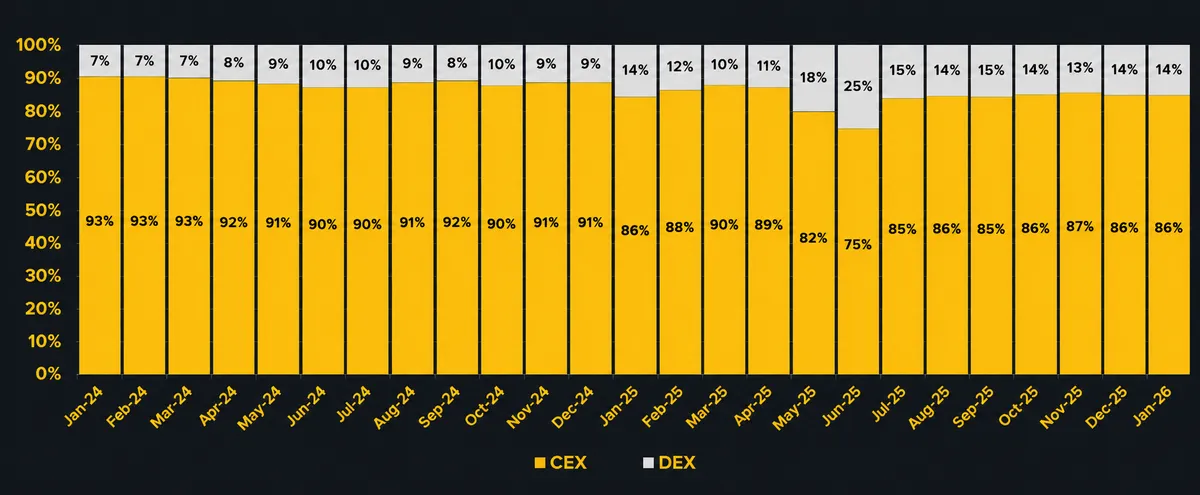
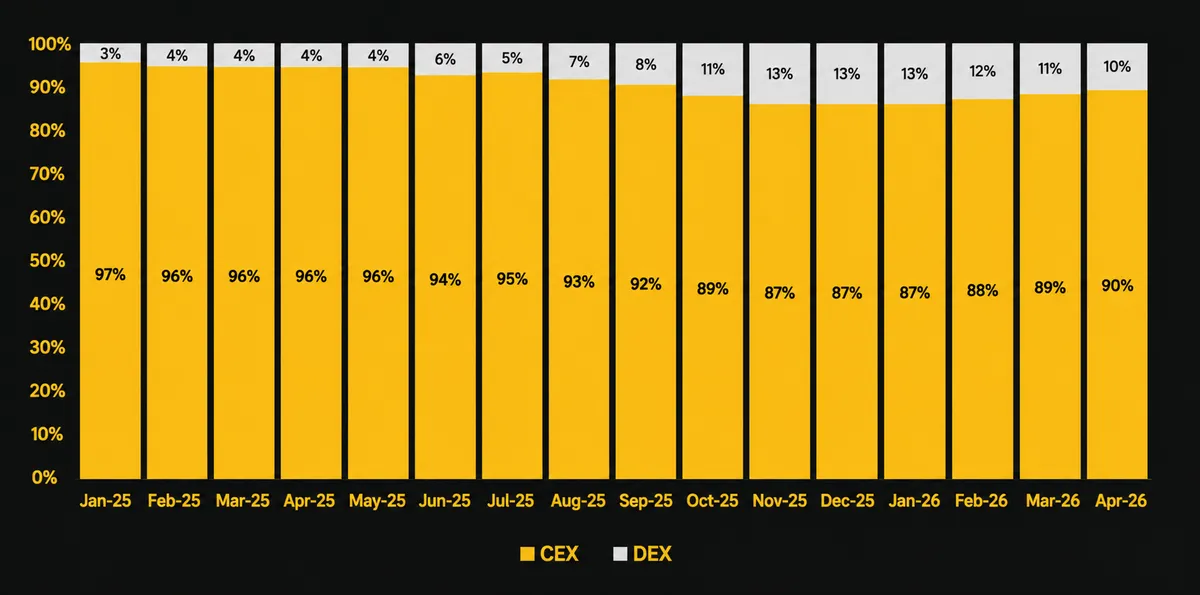
Despite the growth of decentralized venues, CEXs still account for roughly 85% of global spot volume and 90% of perpetual volume. Binance leads both markets, capturing 39.6% of spot activity over the measured period and around 35% of perpetual activity. Several other exchanges also sustain meaningful shares, showing that crypto liquidity is concentrated among a small group of platforms rather than confined to one venue.
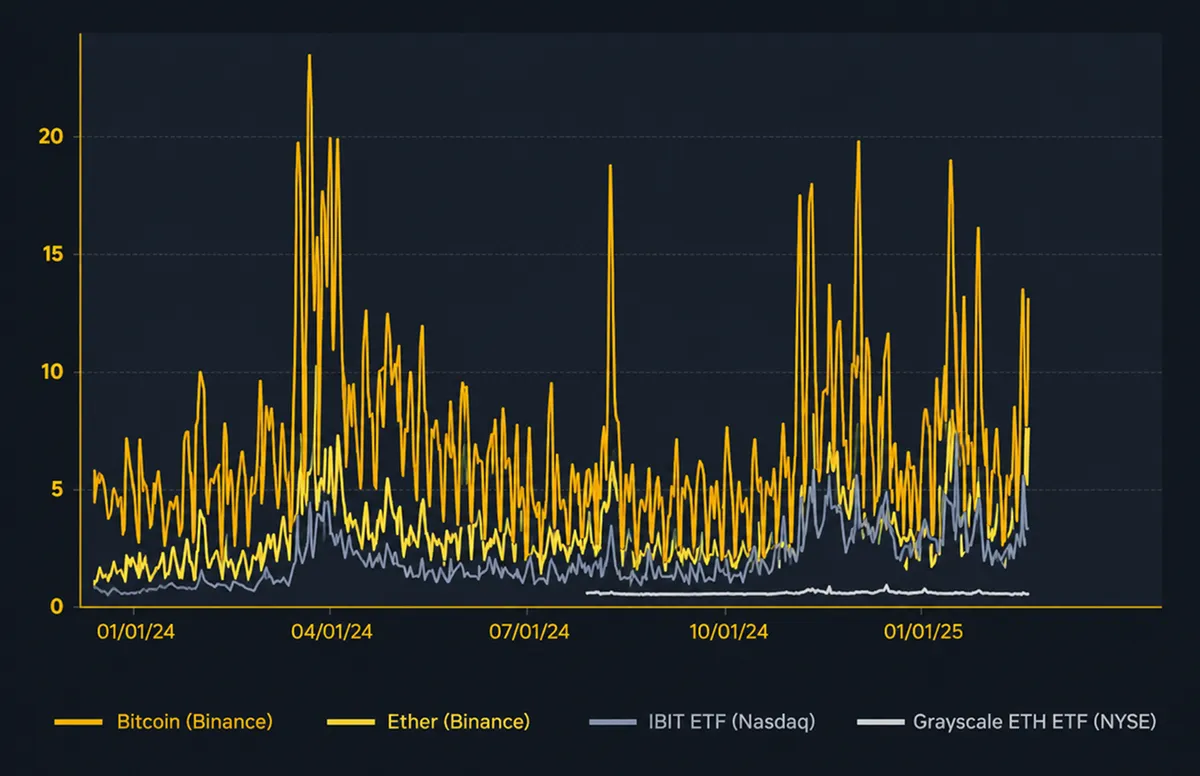
This concentration persists even in the presence of regulated products designed to provide the same underlying exposure. Bitcoin on Binance regularly generates between $5 billion and $20 billion in daily volume, while IBIT on Nasdaq peaked at roughly $2-3 billion and generally trades well below that level. Grayscale’s Ethereum ETF represents an even smaller fraction of the ETH activity observed on Binance. Regulated wrappers have attracted institutional capital, but crypto-native venues remain where most secondary-market trading takes place.
The composition of that flow also matters. During the market stress of December 1, 2025, Binance processed $20 billion in spot volume across 61.9 million trades, compared with $3.6 billion across 6.2 million trades on Coinbase and $3 billion across 9.9 million trades on OKX. A continuous stream of small, frequent orders gives market makers more information and makes it easier to quote tightly without accumulating excessive directional risk. Tighter spreads attract further activity, reinforcing the cycle between flow and liquidity.
Execution Quality
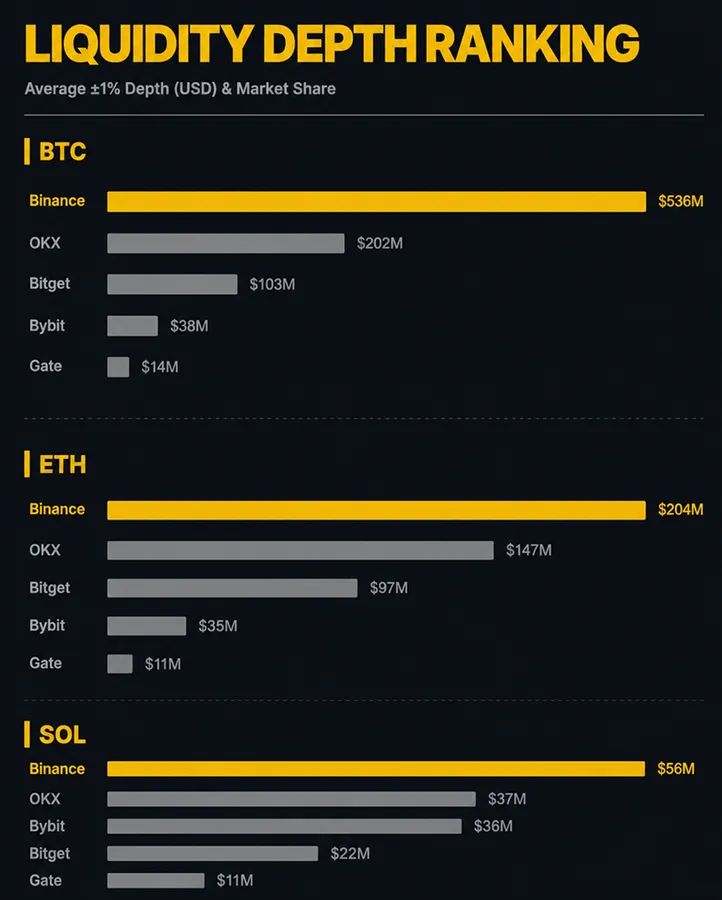
High volume only becomes useful when markets can absorb large orders without significant price impact. According to CoinGlass, Binance’s average liquidity within 1% of the BTC perpetual mid-price reached $536 million in 2025, 2.6 times OKX’s $202 million and more than five times Bitget’s $103 million. The same pattern appears across ETH and SOL, showing that depth is concentrated among a small set of exchanges capable of supporting institutional-sized trades.
A similar analysis led by Keyrock on spot markets reaches a similar conclusion. The research estimates that Binance provides roughly $35 million of liquidity within 2% of the mid-price across its trading pairs, ahead of Coinbase at $23 million and Kraken at $21 million. Closer to the mid-price, Binance offers $9.6 million within 0.2%, almost twice the levels recorded on Coinbase and Kraken.
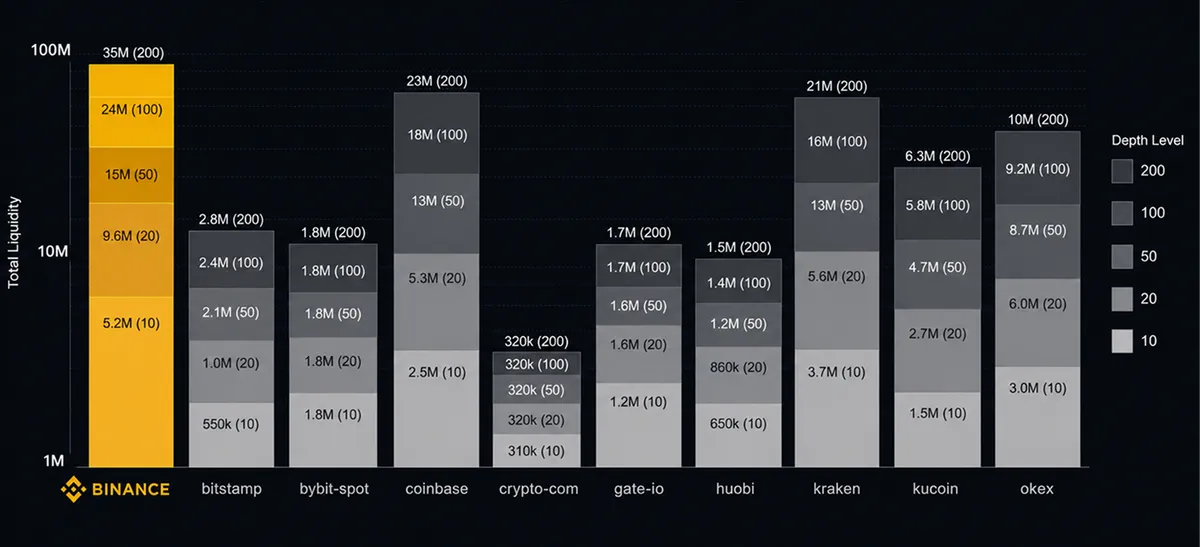
This depth determines the actual cost of using a market. Retail traders benefit from tighter spreads and lower slippage, while larger participants gain the capacity to build, hedge and rebalance positions without materially moving prices. Better execution then attracts more traders and market makers, feeding back into the concentration of flow.
Price Discovery
The structural outcome is price leadership. Price discovery tends to concentrate where information arrives continuously and order books are deep enough for trades to update the market efficiently. Academic research indicates that these conditions are currently strongest on leading CEXs.
A June 2025 study applying the Hasbrouck Information Share methodology across five major market events found that Binance led ETH price discovery in every case, ahead of both decentralized exchanges and CME. The result indicates that Binance is not only processing more activity but also incorporating new information into prices before competing markets.
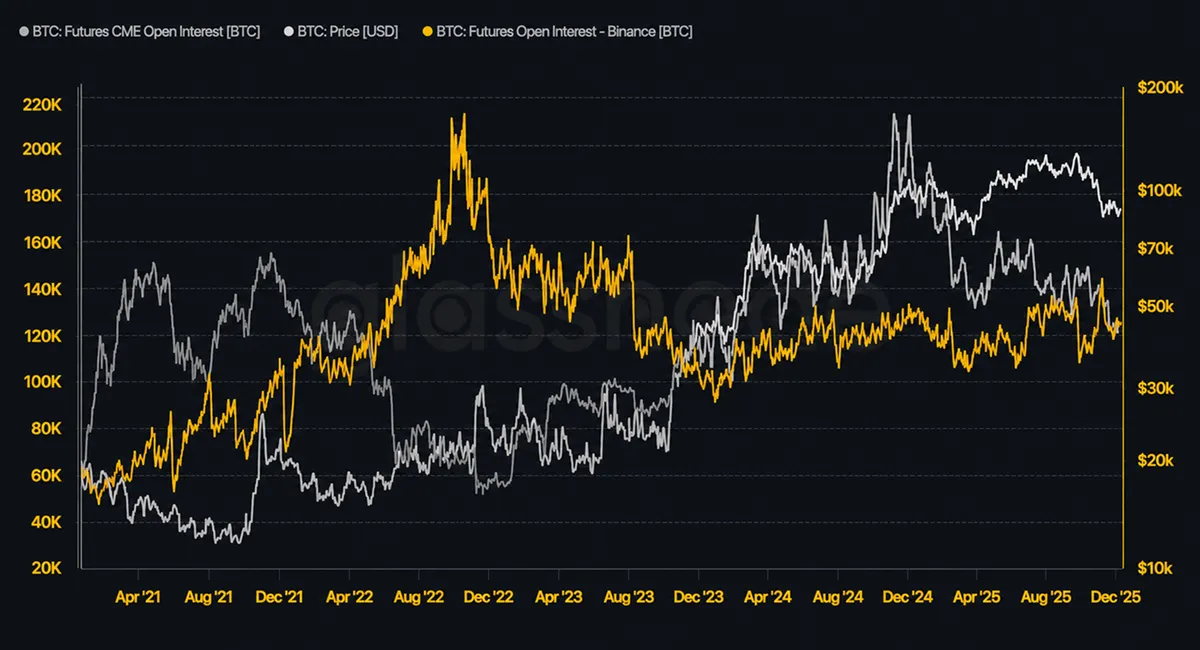
Research using 10-millisecond trading data reaches a similar conclusion for BTC. Before May 2023, Binance Spot accounted for 65-90% of price discovery. Leadership then shifted mainly to Binance Futures, which consistently captured 50-65% of information share, while Coinbase, OKX, and other venues divided the remainder.
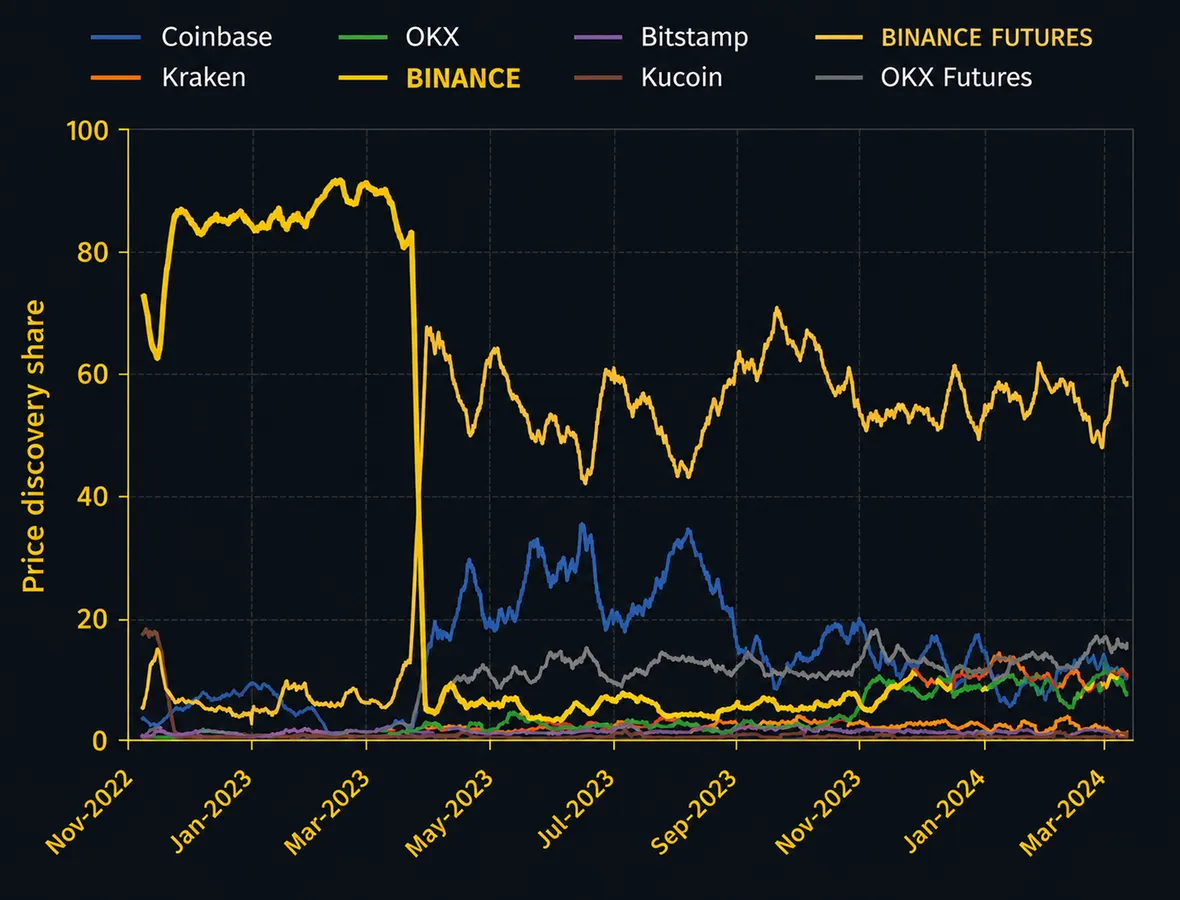
That shift from spot to futures is important. It shows that price discovery is not permanently attached to one instrument or venue: it moves toward whichever market offers the deepest liquidity and most continuous flow. Today, those conditions are most consistently found on leading CEXs, with Binance often acting as the reference market.
CEXs have therefore built more than large trading platforms. They have developed the flow, execution capacity and information density required to support markets at scale. For users, this means tighter pricing and efficient access across products. For institutions, it enables large execution, continuous hedging and capital deployment through a single infrastructure layer.
The next question is whether this advantage can extend beyond crypto. As tokenized stocks, commodities and other traditional assets move onchain, the following section examines whether the same pattern is beginning to emerge around them.
CEXs: the new liquidity hubs for TradFi assets?
RWA onchain is a real market
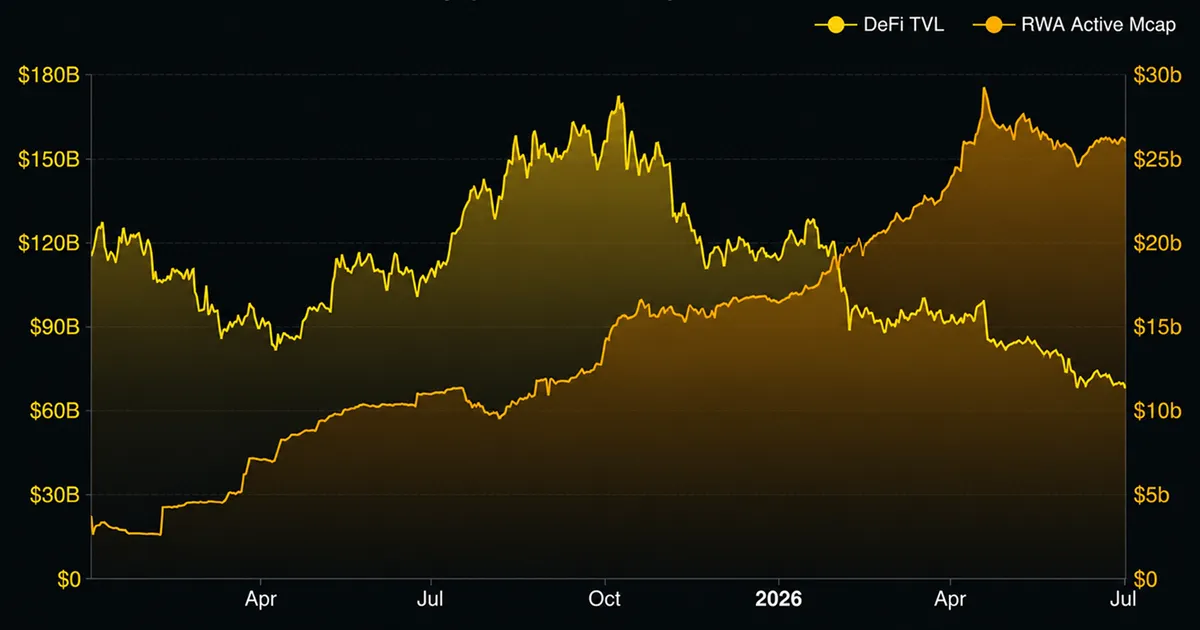
The tokenized RWA market grew from approximately $5.5 billion in early 2025 to $25 billion by mid-2026, with $10 billion of that added in 2026 alone. That growth happened against a difficult broader backdrop: crypto lost roughly 28% of its value in H1 2026 and DeFi TVL fell more than 25% over the same period. The divergence suggests the RWA sector is growing on structural demand rather than market sentiment.
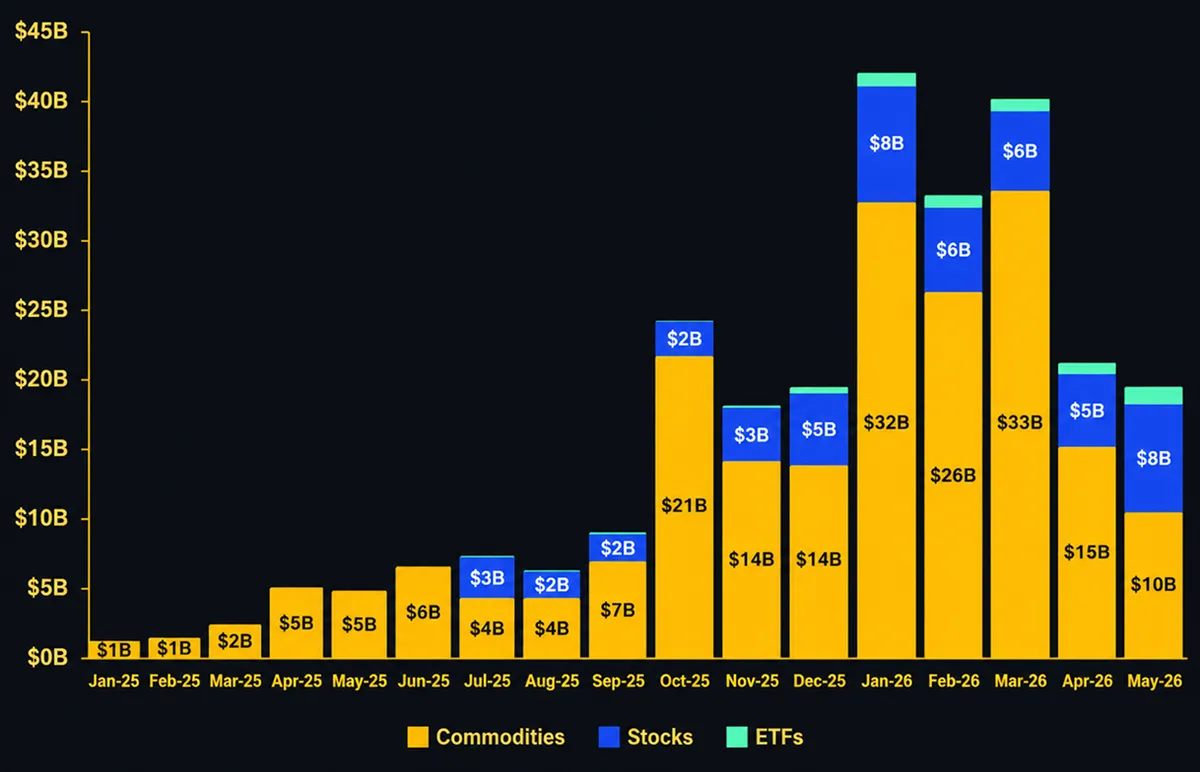
That demand is visible across both spot and derivatives activity. Spot trading volume grew from roughly $1 billion per month in early 2025 to nearly $20 billion today, peaking in Q1 2026 at around $40 billion per month.
Interestingly, the composition of that activity is shifting alongside its scale. In early 2025, virtually all spot trading volume was driven by commodities, primarily gold. Today the picture is more balanced, with stocks representing around 40% of activity and ETFs approximately 10%, reflecting a broadening of the asset class well beyond its initial gold-dominated base.
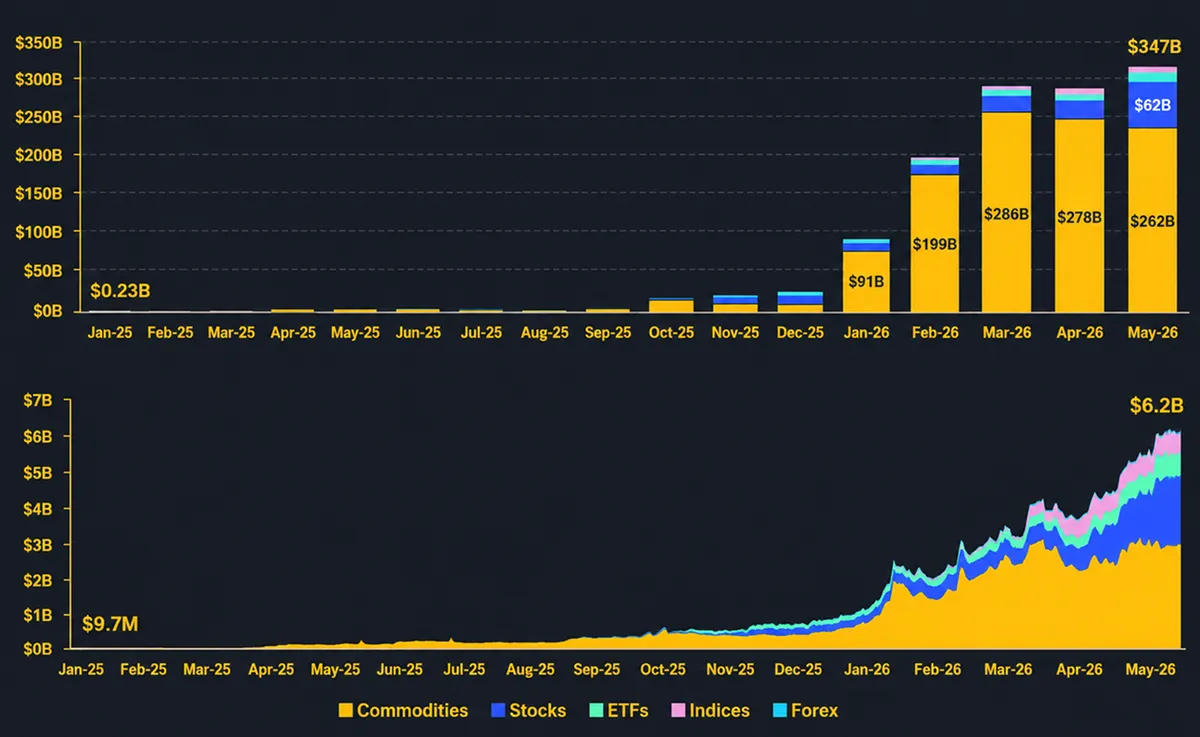
The derivatives market tells a similar story at a faster pace. RWA perpetual trading volume grew from $0.23 billion in early 2025 to $347 billion as of today, with stocks now accounting for roughly 18% of perp volume alongside a still-dominant commodities share. Open interest has grown in parallel, reflecting traders' growing appetite to hold positions rather than simply take short-term directional exposure.
Perp volume exceeded spot volume for the first time at the end of 2025, signaling a shift in market behavior where participants are increasingly seeking price exposure rather than direct ownership of the underlying asset, the same transition that defined crypto derivatives markets a few years earlier.
CEXs are building the infrastructure as they did with Crypto
To sustain this growing demand, infrastructure at scale is needed, and that's exactly what is happening, particularly through CEXs competing to secure their share of the market in their own way.
Listings are the first indicative step of the structural direction each CEX is taking. Across the top thirteen exchanges, hundreds of RWA products were listed between January 2025 and May 2026. MEXC and Gate have gone long-tail, with MEXC reaching 358 total RWA products (199 spot, 159 perps) and Gate listing 224. Their strategy is coverage: get the assets listed and attract users (mainly retailers) searching for them. On the other end of the spectrum, several exchanges have selectively listed far fewer assets: Binance listed more than 70 in perps, Coinbase 23, and OKX 70. The underlying explanation lies in regulation and structural requirements: custody wrappers, regulatory sign-off on the underlying assets, and the compliance frameworks needed to attract not just retail investors but also whales and institutions.
That selectivity reflects a deeper divergence in structural strategy:
Kraken acquired Backed Finance in December 2025, gaining direct control over the xStocks issuance layer, and by early 2026 had distributed that framework across Bybit, Gate.io, and Deutsche Börse's regulated 360X venue. The approach is vertical integration: own the issuance, own the distribution, and let other venues plug into the standard.
Bitget took a different route, partnering with Ondo Finance to list Ondo-issued tokenized equities, reaching approximately 89% of global trading volume in Ondo-issued tokenized stocks in November 2025 before that share normalized as more venues joined.
Coinbase announced its "Everything Exchange" direction in December 2025, launched conventional stock trading for US users, and is positioning 1:1-backed tokenized stocks on Base for a non-US launch structured through a separate regulated entity to navigate the domestic securities framework.
OKX pursued regulatory infrastructure first, becoming the first global exchange to secure full MiCA CASP authorization and passporting services to 28 EEA countries from Malta, before launching RWA index perpetual contracts covering stocks such as Tesla and Nvidia.
Binance's approach goes further, aiming to bridge the gap between TradFi and DeFi rather than choosing one side. With Binance Stocks, users trade assets directly on the centralized platform. Those who want to go onchain can convert into bStocks, tokenized shares issued through a regulated SPV on BNB Chain, and interact with DeFi protocols while retaining the underlying benefits of the asset, including dividends.
Additionally, TradFi institutions and CEXs are increasingly building the RWA stack together rather than competing directly. After becoming the first crypto exchange to pilot triparty banking, Binance has partnered with BlackRock and Franklin Templeton to enable institutional clients to use tokenized money-market funds as off-exchange collateral. OKX has developed its own collateral-mirroring framework with Standard Chartered, Franklin Templeton and BlackRock, combining regulated custody with exchange liquidity. Kraken’s integration of xStocks with Deutsche Börse’s 360X venue provides another example of traditional market infrastructure connecting directly with crypto-native distribution. Together, these partnerships reveal an emerging division of labor: TradFi provides the regulated assets and custody, while CEXs provide distribution, collateral utility and liquidity.
CEXs are leading the market
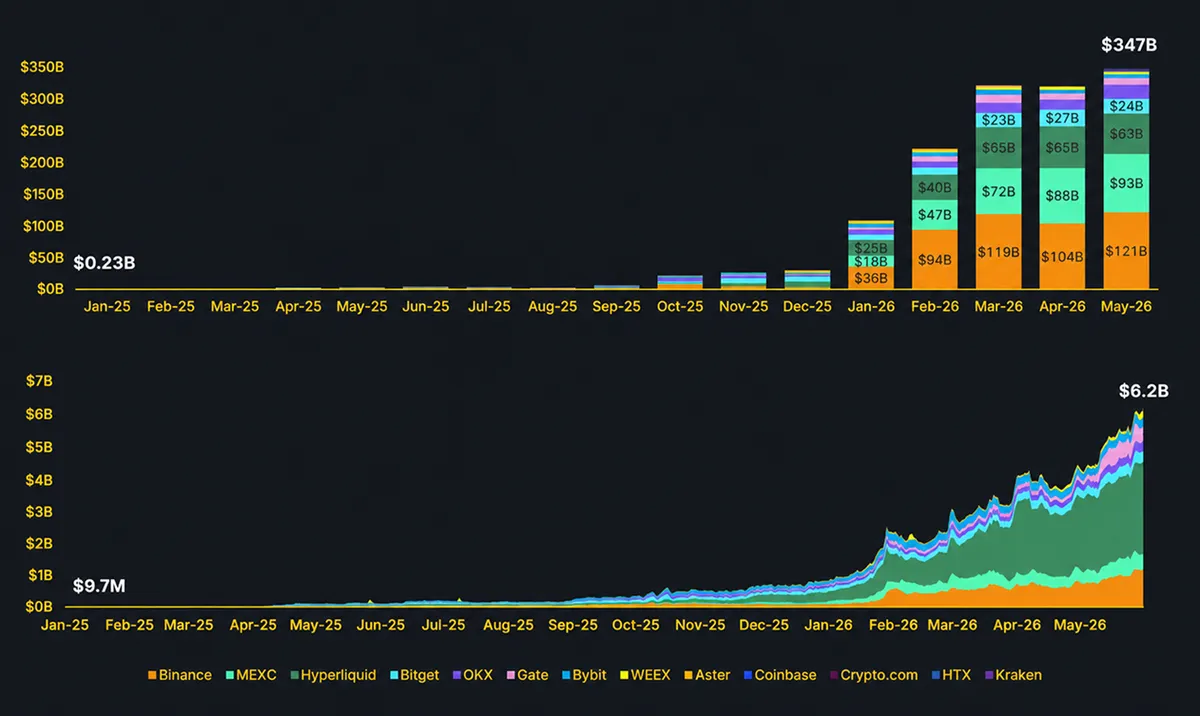
All these choices, infrastructure investments, and partnerships are beginning to show measurable outcomes. Looking at volume alone, CEXs represent the vast majority of RWA trading activity, both across the broader asset class and within equities specifically. Binance leads with 35.9% of TradFi perp volume ($474 billion cumulative in 2026), followed by MEXC at 22.8% and Hyperliquid at 19.8%.
Two things are worth noting. Hyperliquid's OI figures run higher relative to volume than Binance's, reflecting a user base that holds directional positions over time rather than trading in and out. Binance's higher volume-to-OI ratio reflects the opposite profile: short-term traders and algorithmic flow that turns over rapidly.
The second observation is more structural. Despite a first-mover advantage in TradFi perp trading, Hyperliquid's market share has stagnated and come under pressure from CEXs as the market has grown. This reinforces the broader point: in a market where compliance, user base, and liquidity depth matter, moving fast isn't the primary advantage. CEXs already hold the infrastructure, the users, and the regulatory positioning needed to absorb new asset classes at scale, even when they arrive later than decentralized venues.
Still, the market is still embryonic at global scale
The growth figures in the previous sections are real but require context before drawing structural conclusions. According to CoinGecko, TradFi volume across crypto exchanges still amounts to less than 1% of total traditional stock market trading volumes. Tokenized equity TVL sits at approximately $960 million as of March 2026, against a global equity market measured in the hundreds of trillions. The same logic applies to commodities, where tokenized gold has a $5.5 billion market cap and recorded $90.7 billion in spot trading volume in Q1 2026 alone. Against the physical gold market, which exceeds $13 trillion in value according to the World Gold Council, or even against gold ETFs alone, which hold over $500 billion in AUM, tokenized gold represents less than 1% penetration of its nearest comparable TradFi vehicle. In other words, if the leading asset class is still at sub 1% penetration, the broader tokenized asset market is earlier still.
The relevant historical parallel here is the ETF itself. SPDR Gold Shares launched in November 2004 and took roughly five years to reach $30 billion in AUM. The SPDR S&P 500 ETF launched in 1993 and didn't reach mainstream institutional adoption until the mid-2000s, more than a decade after it first traded. In both cases, the infrastructure existed, the regulatory wrapper was in place, and the underlying asset was well understood. What took time was the accumulation of track record, the normalization of the instrument within institutional allocation frameworks, and the gradual build of secondary market liquidity. Tokenized assets are at an earlier stage of that same process.
The advantages TradFi can't replicate
The size comparison in the previous section frames tokenized assets as a nascent market catching up to TradFi. However, it doesn't capture that tokenized assets aren't simply trying to replicate what TradFi does.
The most concrete expression of this is DeFi composability. A tokenized stock held through a crypto-native venue isn't just a price exposure. It's a productive financial instrument that can simultaneously collateralize loans, earn trading fees in automated liquidity pools, and interact with other DeFi protocols, while a traditional brokerage account offers none of these simultaneously. Many platforms are leading the way, such as Kamino and Morpho, which accept xStocks as collateral. On BNB Chain, TermMax launched tokenized stock collateral offering fixed-rate DeFi lending against Backed Finance tokens. Zodial, a direct lending protocol on Solana, extends this further. The platform allows cross-margin strategies that combine tokenized equities with crypto and stablecoins in a single unified position.
CEXs like Binance and Kraken are positioned to become the bridge layer into these protocols, with bStocks and xStocks designed specifically to move between the CEX order book and the onchain DeFi layer without friction. bStocks, for instance, are convertible back to the underlying stock on Binance, providing users with optionality to directly buy exposure to the underlying asset and to compare CEX and onchain liquidity, since converting between stocks and bStocks is free.
The 24/7 nature of CEX trading also creates a structural advantage for taking the lead against traditional venues and becoming places where price discovery happens. When news breaks about Nvidia after NYSE closes, tokenized equity perp markets adjust immediately, funding rates move, positioning shifts, and price reflects new information before a traditional equity market has reopened. TradFi venues cannot offer this structurally, regardless of regulatory reform, because the underlying market infrastructure is built around fixed trading sessions.
Early signs of a familiar pattern
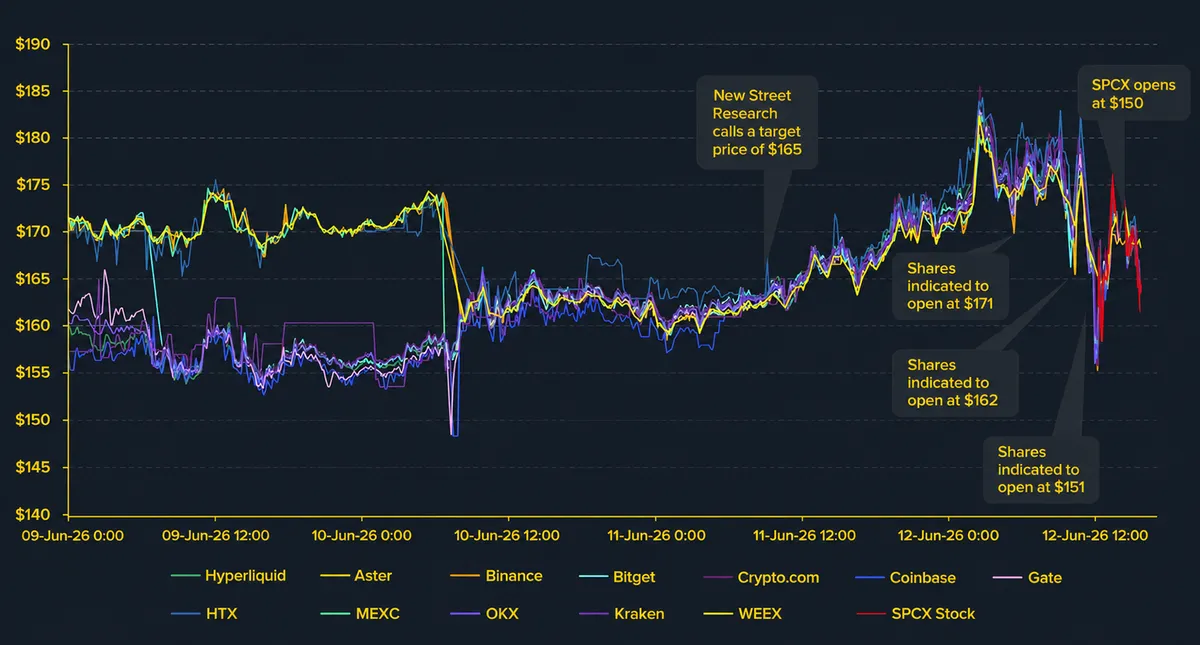
The SpaceX IPO in June 2026 offered the most direct preview of what price formation in tokenized assets could eventually look like. In the week before SpaceX listed on Nasdaq, pre-IPO perpetual prices ranged from $155 to $170 across major exchanges. As the listing date approached and more public information became available, prices across Binance, OKX, Gate, and Coinbase converged toward $160-$165 by June 10. The final Nasdaq opening price settled within 5% of that range. This suggests that informed flow is beginning to aggregate, cross-venue prices are beginning to align, and the underlying asset's price formation is starting to involve the tokenized derivatives layer, mainly through centralized exchanges.
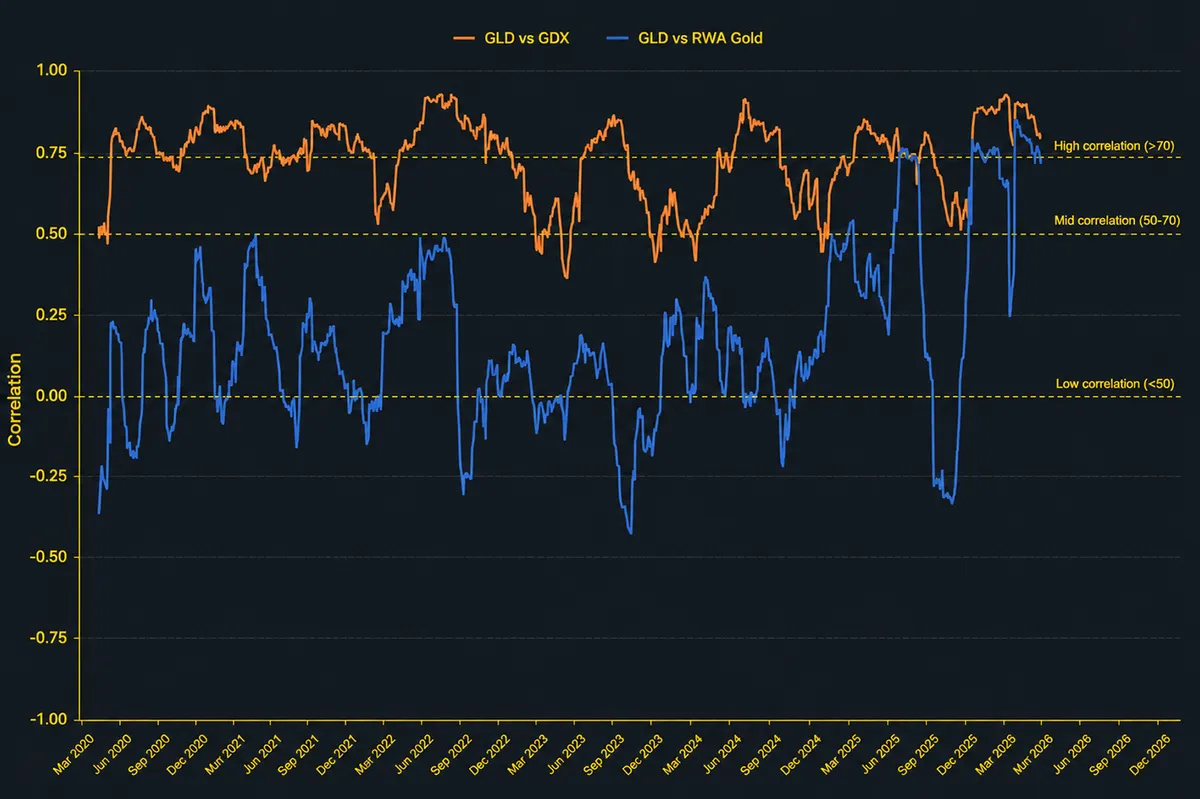
Tokenized gold offers a second signal with volumes breaking above the 0.70 correlation threshold with traditional gold markets in Q2 2025, a position held through Q1 2026. For most of its history, tokenized gold traded like a crypto-native novelty, decoupling entirely from physical gold market dynamics. That correlation shift suggests participants are beginning to use it as a genuine hedge instrument rather than a speculative proxy, which is a meaningful maturation signal for the asset class as a whole.
The parallel to early crypto is the most honest frame for where this market sits. In 2017 and 2018, CEXs were building infrastructure for an asset class that barely existed at scale: order books were thin, instruments were rudimentary, and volumes were a fraction of what traditional financial markets handled daily. What followed was a decade of compounding infrastructure investment, liquidity concentration, and price discovery consolidation as seen in the second section. The sequencing now visible in tokenized assets is the same: infrastructure investment is outpacing liquidity concentration; the same venues that built the crypto market structure are building RWA infrastructure; and the same mechanism that rewarded depth in crypto will reward it here.
Structural risks and open questions
Building infrastructure that works at scale is one thing, but surviving long enough to capitalize on it is another. From FTX collapsing due to overleveraging and mismanagement of client funds to platforms facing sudden market disruptions due to regulatory challenges, the industry's history shows that competition isn't the only threat. The risks below are the most likely to shape the industry's growth trajectory and determine which venues emerge as structural winners.
Regulation has always been the industry's most persistent friction point: a back-and-forth between clarity and uncertainty that forces every platform to stay alert and adapt. In recent years, meaningful progress has been made: MiCA in Europe, the SEC's first formal statement on tokenized securities in January 2026, and the DTCC's tokenized settlement pilot all point in the right direction. But progress doesn’t automatically mean simplicity. MiCA is a powerful example: its promise is greater clarity for users, more certainty for firms and a level playing field for responsible operators. Yet as the framework has moved from legislation to implementation, questions remain about whether authorisation processes are being applied in a genuinely harmonised way across the EU. Several major exchanges were unable to secure licences before the end of the relevant transitional period, creating uncertainity for EU users who depend on access to safe, regulated digital asset services.
Beyond Europe, the picture is even more fragmented: countries treat tokenized assets differently, apply different AML and KYC requirements, and move at different speeds. For CEXs expanding into tokenized equities, that fragmentation translates directly into jurisdiction-by-jurisdiction licensing processes that slow exactly the speed advantage this report identified as their structural edge. The gap between what's technically possible and what's legally permitted across the full addressable market remains the industry's most consequential open question.
The SpaceX episode exposed a different kind of fragility. When xStocks couldn't secure share allocation at IPO, over $1 billion in customer orders had to be refunded across multiple CEXs simultaneously. That failure revealed a structural dependency specific to TradFi assets and absent from crypto-native markets: the intermediary layer between the CEX and the underlying asset. Tokenized equities carry different legal obligations around investor eligibility, reporting, and cross-border distribution that AML and KYC frameworks designed for crypto don't automatically satisfy. The instant settlement and flexibility that CEXs offer collide with a real-world issuance process that still involves manual steps and multi-day processing cycles that the blockchain layer alone can't eliminate.
DEX competition is a third risk that the industry tends to underestimate. This report has framed Hyperliquid as a meaningful but structurally contained challenger and that framing is honest for now. But DEX share in perpetual trading has grown from 3% to 13% in 18 months. If that trajectory continues, the CEX structural lead in derivatives, which is the foundation of the price discovery argument in the second section and the RWA growth argument in the third section, becomes less permanent than the current data implies. DEXs aren't winning yet, but they're compressing the gap faster than most CEX timelines account for.
Execution risk compounds all of the above. Most major CEXs are simultaneously building spot tokenized assets, perpetual contracts, real-share brokerage products, DeFi integration layers, and institutional custody frameworks. Spreading development across all of them creates compounding risk if any single layer fails, and concentration risk if one player comes to dominate the intermediary stack.
Finally, macro conditions and market dynamics remain an external variable that no amount of infrastructure investment can fully insulate against. The RWA sector grew 40% in H1 2026 while broader crypto markets fell 28%, a sign of structural demand decoupling from sentiment. But a sustained institutional risk-off cycle, a major exchange failure, or a sharp reversal in regulatory momentum could compress the institutional demand driving this market's growth faster than the underlying infrastructure can absorb. For TradFi assets specifically, secondary market liquidity remains thin in places, access varies significantly by jurisdiction, and price fragmentation hasn't fully been resolved. For example, the SpaceX pre-IPO saw discrepancies of $15 to $20 across platforms within the same week.
Conclusion
The argument this report has traced is ultimately a simple one, even if the evidence behind it spans two decades of market structure evolution. Traditional financial markets and crypto were operating in two distinct silos: different assets, different infrastructure, different users. That separation is closing, driven by institutions bringing capital onchain, regulation progressively opening the door to tokenized assets, and a new generation of investors who see no meaningful distinction between a stock and a tokenized stock as long as the execution conditions are right.
In this context, CEXs have become the center of global crypto trading for a straightforward reason: they built the infrastructure that made markets function, absorbed the flow that depth attracts, and compounded those advantages across successive market cycles until price discovery had nowhere else to go. That process rewarded the venues that got the fundamentals right: execution reliability, liquidity depth, and the patience to build before the assets arrived at scale.
Tokenized assets are at an earlier stage of the same process. The volumes are real and growing fast, the infrastructure investment is broad and accelerating, and the early data shows the same flywheel dynamics beginning to emerge: flow concentrating on venues with the deepest existing infrastructure. What's striking is that the venues leading this transition aren't new entrants built specifically for tokenized assets; they're the same platforms that built the crypto liquidity layer, now expanding their scope. Stocks, commodities, ETFs, pre-IPO instruments: CEXs are becoming the single point of access for all of it, progressively turning into the super apps of global trading that traditional brokerages and exchanges are structurally unable to replicate at the same speed or scale.
What remains open is the pace and the distribution of that outcome. The intermediary fragility exposed by the SpaceX episode, the compliance gaps between crypto-native frameworks and securities law, the growing competition from DEXs, and the thinness of secondary liquidity in most tokenized assets are real constraints. The venues that emerge as structural winners will be those that translate existing liquidity depth and user trust into new asset classes efficiently enough to restart the flywheel: flow concentrating, depth increasing, price discovery following.
When that happens, CEXs won't just be exchanges anymore. They will become liquidity hubs and super apps for anything trading.