Ratings in Motion
Superior performance is hard to manufacture; transparency is a choice. This week, we want to highlight the way that new data can affect token ratings by taking a close look at Lido’s governance token, LDO.
Forgd
LDO
DefiLlama’s Universal Token Ratings dashboard is now a month old. When it first launched, we called it a “rating you have to keep earning.” That’s because the UTR is a living rating system, tracking token performance in real-time to give users an up-to-the-minute assessment of a token’s liquidity, bid-ask spreads, volume, exchange coverage, derivatives conditions, market maker adherence, and more.
In the weeks since, we’ve also described how the tokens generally score far better on the Performance axis than they do on the equally important Disclosure axis. The latter is an albatross, weighing on the scores of tokens that would otherwise earn stellar ratings. In other words, token issuers’ willingness to be transparent — or lack thereof — serves as a kind of bottleneck.
But it doesn’t have to be that way. Superior performance is hard to manufacture; transparency is a choice. This week, we want to highlight the way that new data can affect token ratings by taking a close look at Lido’s governance token, LDO.
As of Tuesday, LDO has seen an 87% month-over-month increase in its UTR score. Here’s why.
LDO in the limelight
Last week, we called out LDO as an example of a high-profile token with a middling overall score.
Its performance scores were exemplary, a testament to its large market capitalization and interest among crypto traders.
But it had poor marks on the Disclosure axis. Lido’s blog and documentation provided an incomplete view of its leadership team (7 out of 10) and organizational structure (4 out of 10) and revealed almost nothing regarding insiders’ wallet addresses (2 out of 10) or allocations to external parties such as investors, exchanges, or influencers (3 out of 10). Nor was it immediately clear who controlled its treasury wallet (2 out of 10).
That meant it earned an overall score of 32.4 and a BBB rating. Not terrible. But not great, either.
That changed after Lido provided additional information that had been scattered across posts in its governance forum, YouTube videos, social media, employees’ LinkedIn profiles, and more.
LDO now has an AA rating and an overall score of 59.55, good for second in the UTR dashboard. It was lifted by a stellar Disclosure score of 8.63, the second-highest in the UTR.
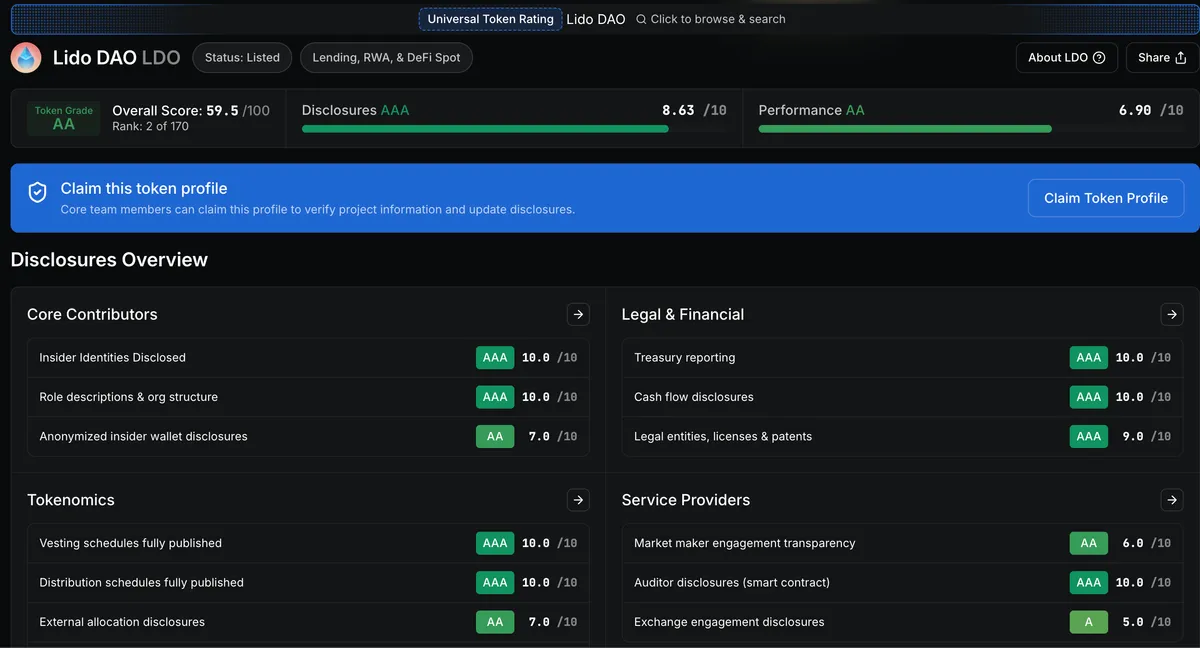
Lido furnished executives’ profiles and pointed to its quarterly calls, hosted for the benefit of tokenholders. Those calls offer regular updates on the makeup of its leadership team. Lido also provided the address from which pseudonymous contributors are compensated, which gives observers a detailed, if imperfect, picture of exactly who the organization is currently paying. It also corrected the record regarding its vesting schedules, shared limited information regarding its sole market maker engagement, clarified the manner in which token holders exercise control over the Lido treasury, and provided a detailed breakdown of its relevant legal entities.
LDO now has a perfect score on eight out of 13 sub-categories within the Disclosure axis, though it still has room to improve in terms of exchange engagement, external allocation, and insider wallet disclosures.
All of which is to say, this highlights the motivation behind building the UTR. Token ratings systems predate the UTR, though few are as comprehensive. Few are updated so frequently. Moreover, DefiLlama is among the most-visited and most-trusted sources of information within the DeFi ecosystem. The UTR was meant to provide issuers an incentive to do better. We hope that additional teams will come forward, filling out gaps in publicly available (our easily accessible) information, making it easier for investors to make informed decisions as they navigate the wild world of crypto.