The rise of HIP-3 pre-IPO markets, and how to price them
Thanks to the HIP-3 framework, anyone can launch a perpetual market for almost any asset, from crypto to equities to commodities, with the deployer taking on the oracle.
Redstone
Hyperliquid has become the de facto venue for onchain perpetual futures, clearing roughly $220B in perp volume a month with over $13B in open interest. Thanks to the HIP-3 framework, anyone can launch a perpetual market for almost any asset, from crypto to equities to commodities, with the deployer taking on the oracle. This setup has drawn several teams building real-world-asset and equity markets to the network.
The appetite for these markets skyrocketed earlier this year, during the US-Iran conflict. With traditional oil markets closed over the weekends and news breaking around the clock, traders turned to Hyperliquid's crude perpetual to price the moves in real time, and oil briefly became one of the platform's most-traded markets.
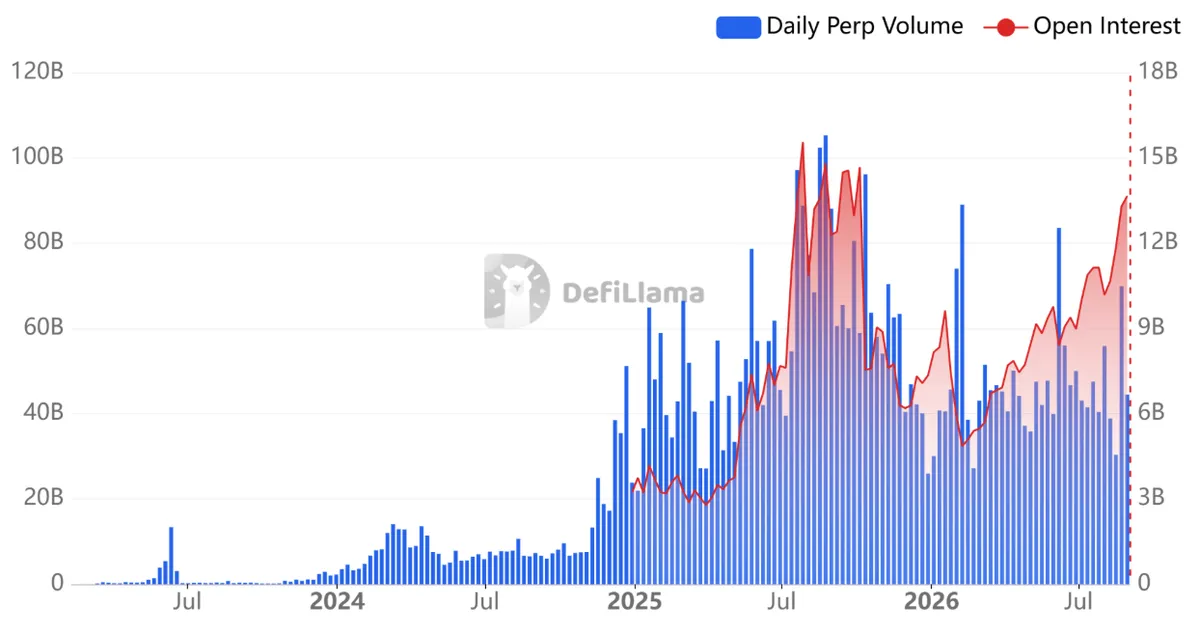
It was an early demonstration that onchain venues can carry price discovery when the traditional market is dark. That dynamic is not limited to commodity markets, with tokenized stocks and pre-IPO markets now trading on Hyperliquid around the clock.
The Rise of Pre-IPO Onchain markets

On August 24, a new market for tokenized Anthropic shares went live on Hyperliquid under the ANTH ticker. Since then, the market has generated $24.01M in trading volume. Open interest currently sits at approximately $3.3M.
The ANTH market on Hyperliquid is not the only venue pricing Anthropic ahead of its IPO. Binance listed its own pre-IPO perpetual on June 2, hours after Anthropic filed its confidential S-1, with up to 20x leverage. Coinbase followed in late June. The A.I. giant was valued at around $965B in its May 2026 Series H, the largest private funding round on record, and has since filed confidentially for an IPO with a listing reportedly targeted for later this year.
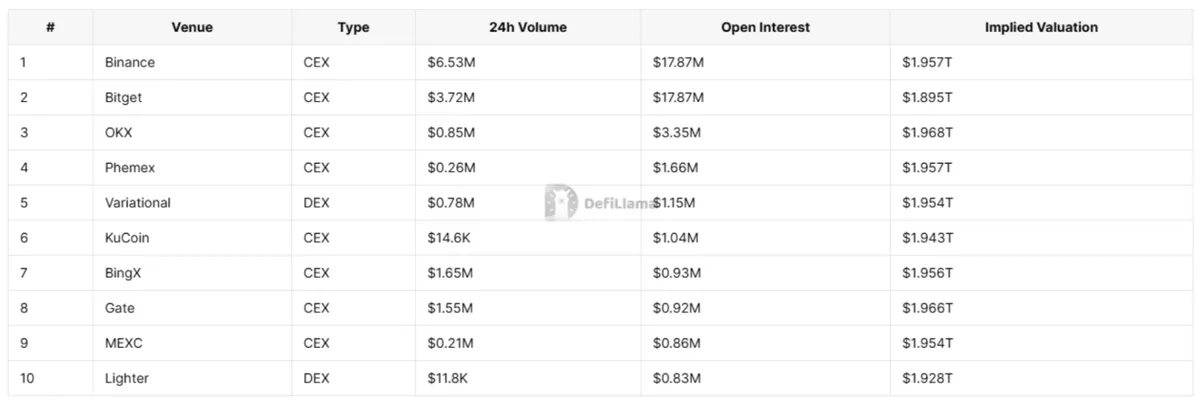
DefiLlama's own Pre-IPO dashboard tracks what the market prices Anthropic at right now: across the 18 venues it follows quoting an Anthropic perpetual, the average implied valuation sits near $1.96 trillion, more than double the Series H mark and a 42% premium over Anthropic's current secondary valuation of $1.38 trillion, itself up 717% over the past year.
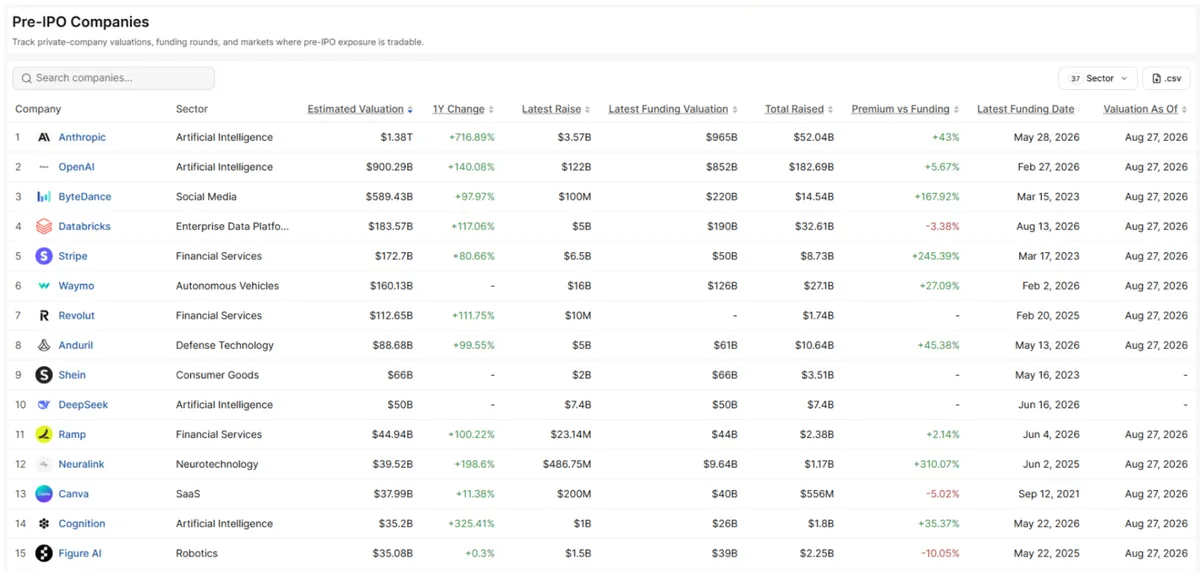
Previous pre-IPO markets on Hyperliquid have already made the round trip, with varying degrees of accuracy. SpaceX traded as a pre-IPO perpetual for weeks before its June 2026 listing, and in May, the perpetual for chipmaker Cerebras came within a couple of percent of its Nasdaq open in the hours before listing.
When things go smoothly, the perpetual settles once the company goes public, and the market moves on. But that isn't always the case, and what separates the clean close from the messy one is the data feeding the market, which is why choosing a reliable oracle is fundamental for any team launching HIP-3 markets.
RedStone has been supporting HIP-3 markets from day one with a purpose-built oracle stack for Hyperliquid's permissionless markets. For assets like ANTH that have no continuous public price, RedStone Live stays on when TradFi closes, switching to derivatives markets that trade around the clock on their own order flow.
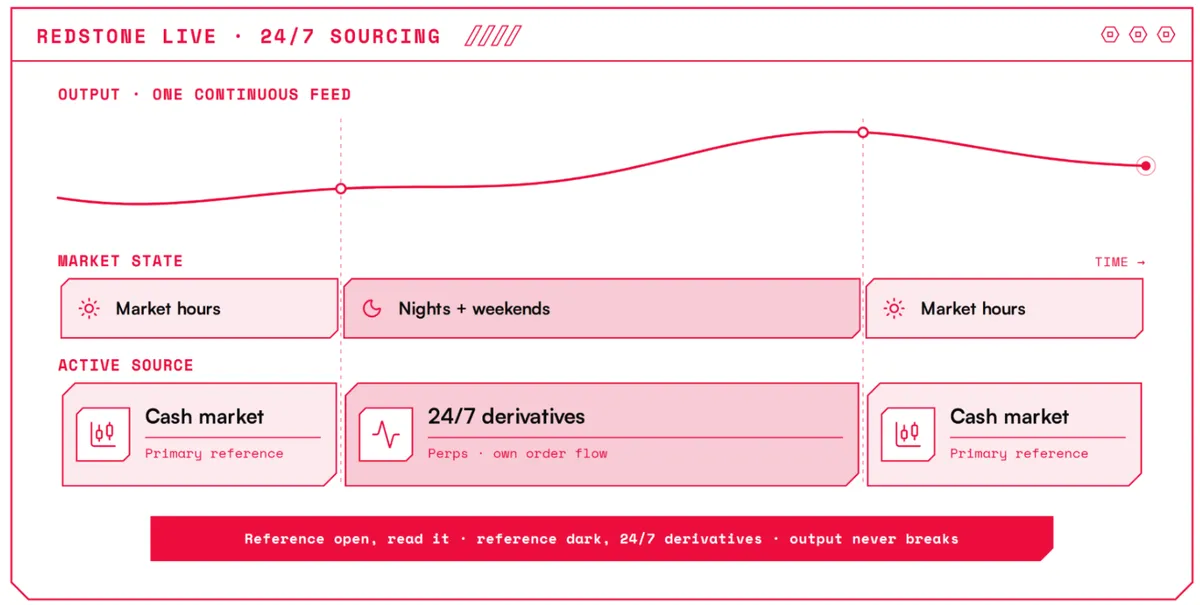
How a pre-IPO market gets priced
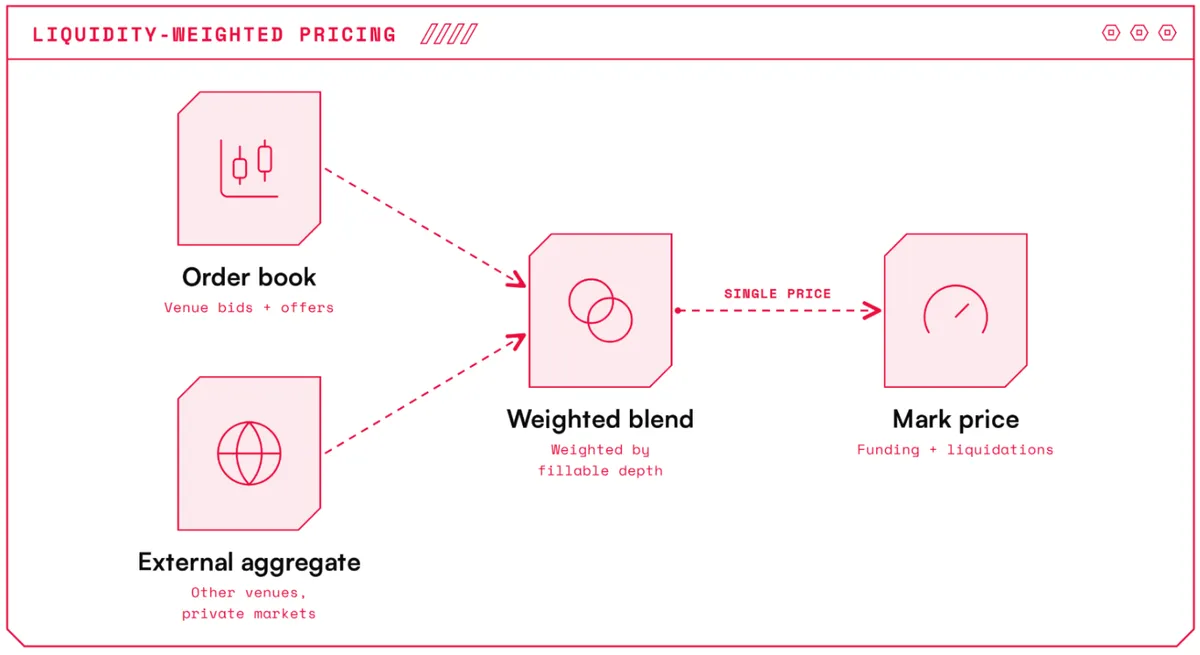
On a pre-IPO market there is no public exchange listing the asset, so there is no authoritative price to read. The oracle has to assemble one from weaker signals: the market's own order book, the live bids and offers from traders taking positions, and data from other venues where the same exposure trades, including private-share marketplaces and onchain pre-IPO markets.
Neither input is enough on its own. A reliable model combines both inputs into a single price through a liquidity-weighted mechanism. The more real volume backing the orders on the book, the more the price leans on it, and the thinner that volume is, the more it leans on the external aggregate.
On the Anthropic perpetuals DefiLlama tracks, Binance and Bitget alone carry roughly three-quarters of total open interest. Coinbase's book is thin enough that its price would lean far more on the external aggregate than the order book.
External events like a new funding round or a stock split can also reset the price. If these inputs are not properly managed, they can lead to cascading liquidations.
On May 28, 2026, a SpaceX pre-IPO market on Hyperliquid fell from around $2,277 to $1,254 in under half an hour. The 45% drop came from the offchain feed that mishandled a 5-for-1 stock split, reading a routine corporate action as a price collapse. The market was too thin to absorb the bad data, so it cascaded into forced liquidations across roughly 400 traders before the price recovered. Nothing about the underlying company had changed.
RedStone handles corporate actions through a primary/fallback price state system with independent offsets, designed to distinguish a price move from a mechanical reset. On top of that, a 4-of-6 multisig quorum ensures no single node can move the price unilaterally, preventing oracle manipulation attacks.
The rise of Hyperliquid: growing fast, priced carefully
Before perp markets, trading that exposure was reserved for accredited investors. Even then, these markets trade on secondary platforms with steep minimums or OTC desks quoting in the millions. That changed with the arrival of synthetic perps on exchanges like Binance, Coinbase, and Hyperliquid, the latter of which runs without a centralized intermediary.
On August 19, at a gathering of blockchain and technology executives, President Trump stated that the CFTC is working to bring Hyperliquid into the US "in a fully compliant and legal fashion." Hyperliquid currently blocks US users, so an onshore path would widen its addressable market considerably.
If the CFTC does bring Hyperliquid onshore, a larger and less forgiving crowd shows up, trading at size on markets where the right price is not easily available. In this scenario, getting the data layer right is probably the most important task for any team building HIP-3 markets.