Investor Relations Dashboard: bespoke, DefiLlama-vetted data
The Investor Relations Dashboard lets crypto companies and protocol developers showcase more bespoke data, giving would-be investors a more granular, curated peek into their business.
NEAR
S
SPK
DefiLlama has few peers in the business of gathering onchain data. It’s been cited by the US Treasury Department, the European Central Bank, and the International Monetary Fund.
Still, some organizations need more.
That’s where DefiLlama’s Investor Relations Dashboard comes in.
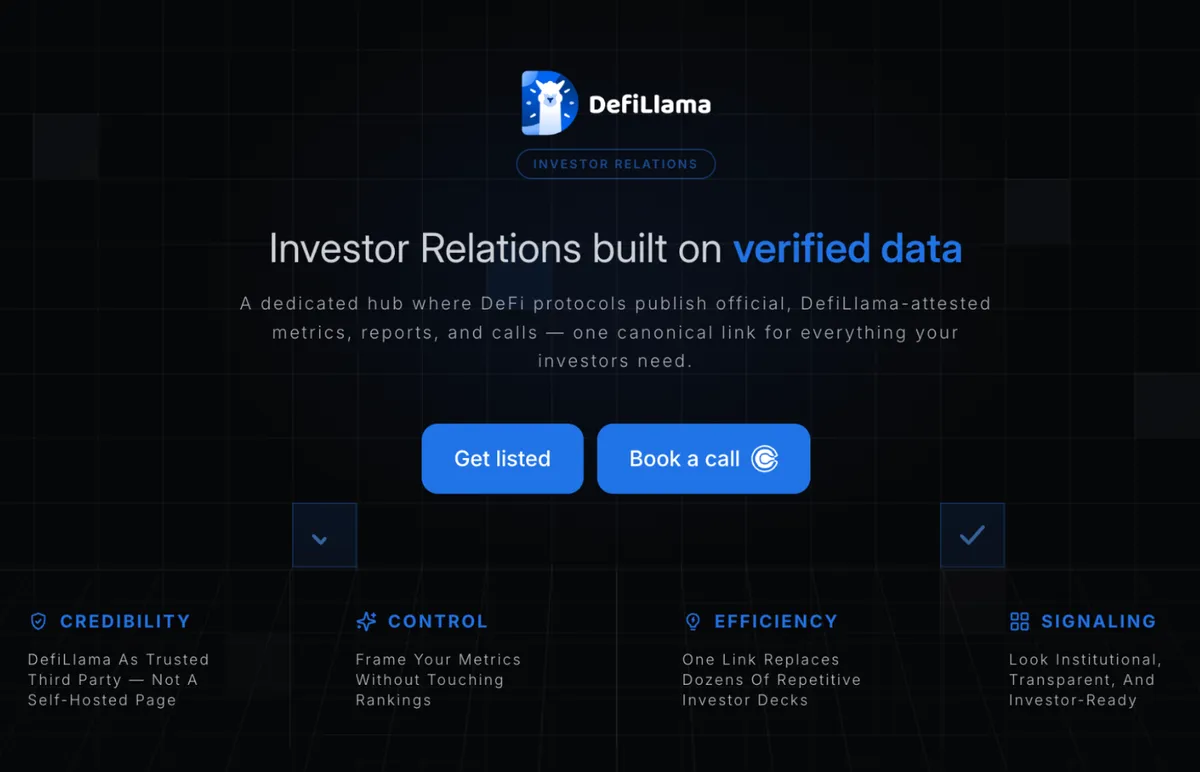
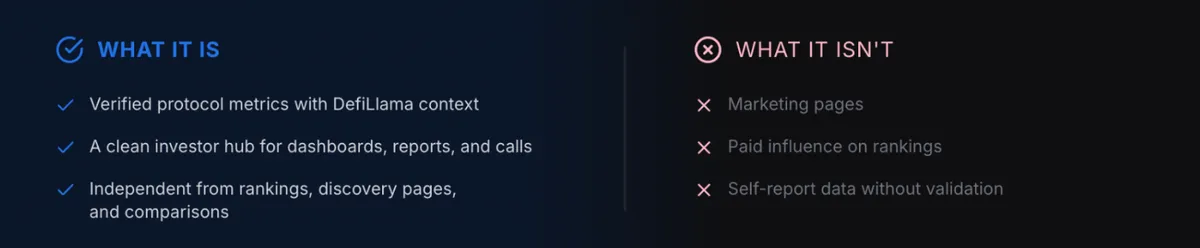
The typical DefiLlama dashboard features standardized data, which allows users to compare protocols and chains on an apple-to-apple basis. The Investor Relations Dashboard lets crypto companies and protocol developers showcase more bespoke data, giving would-be investors a more granular, curated peek into their business.
That means dashboards can be customized depending on the priorities, goals, and objectives of protocol developers.
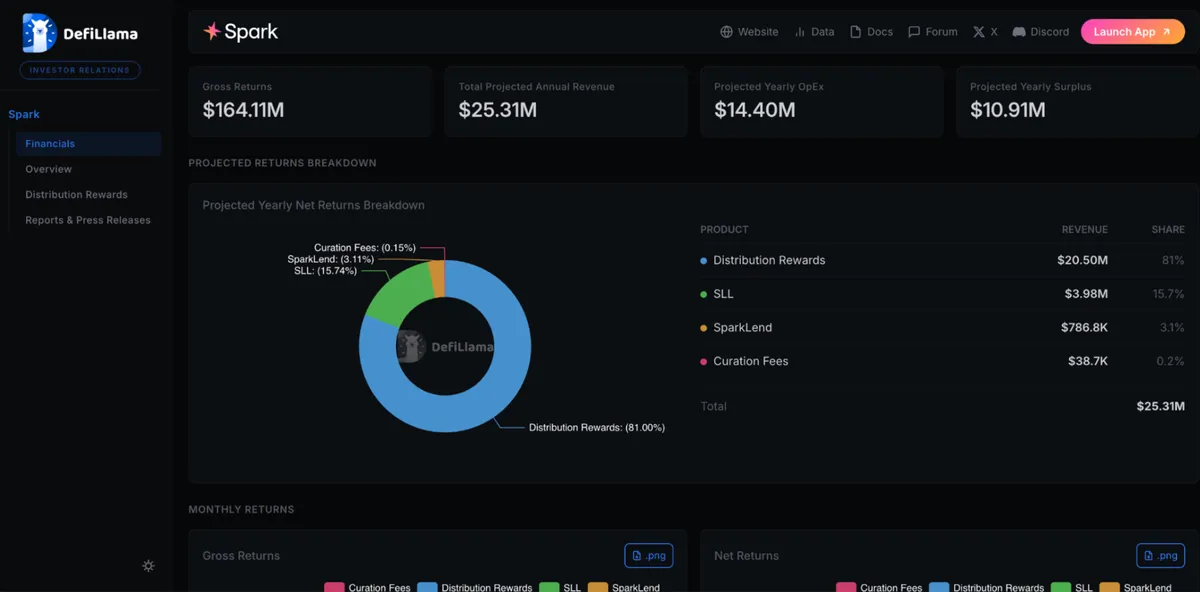
Sonic’s investor relations dashboard highlights revenue generated by FeeM, a feature that lets builders earn directly from the transaction activity they generate on the blockchain. Near’s IRD includes an investment thesis that explains NEAR tokenomics and the best way to value the token. Spark’s IRD highlights the protocol’s projected annual revenue, surplus, and operating expenses.
“It's a separate dashboard that's designed for the protocol to have one place they can send people and say, 'This is everything you need to know about us, and it's presented in the way that we feel best represents ourselves,’” Scott said.
This has become critical as investors increasingly focus on value accrual.
Once upon a time, it was enough for a crypto project to demonstrate high volume or TVL. Those days are over. As tokens proliferate and protocols like Hyperliquid show that onchain systems can also be viable businesses, the pressure is on developers to prove their protocols can direct value to their investors.
Crypto businesses have excellent data analysts of their own. But drawing attention to key information can be a struggle.
“If they build their own internal dashboard, then they’re responsible for getting views there,” Scott said. “Whereas most of these protocols, the most-viewed dashboard about them is probably going to be their normal DefiLlama page.”
And if that protocol has an Investor Relations Dashboard, its main DefiLlama page — the first stop for any would-be investor — will include a link to its IRD, letting the protocol put its best foot forward.
There is also a centralized IRD hub at investors.defillama.com, making it easy to quickly access any protocol’s investor relations dashboard.
Perhaps most importantly, the information is all DefiLlama-approved.
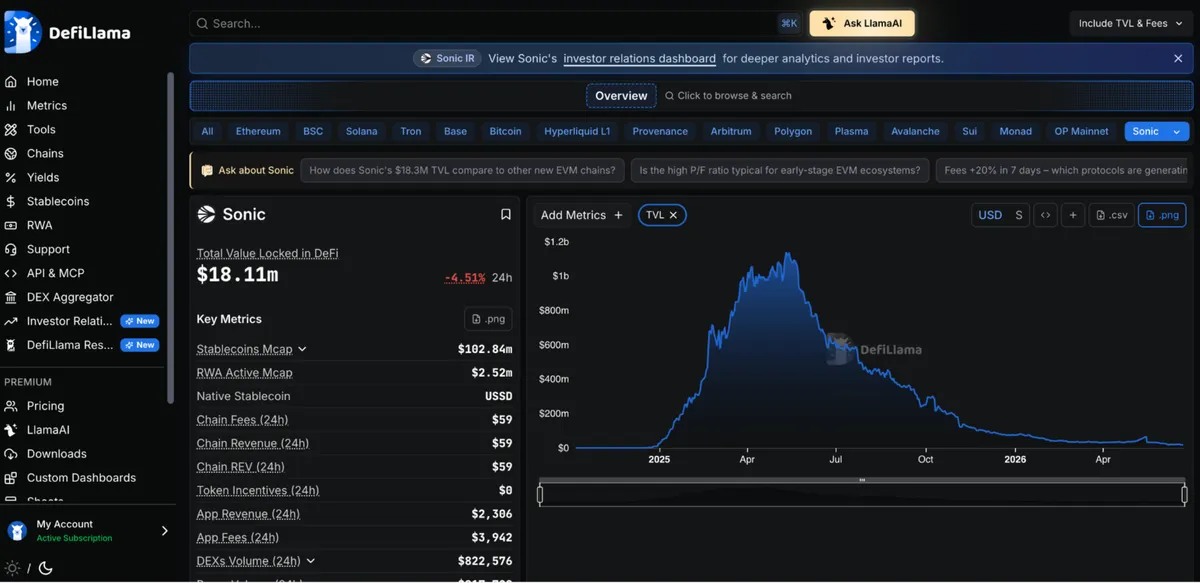
“All the data still has to be verified by us,” Scott said. “We did have cases where a protocol wanted us to show something on the IR dashboard, and we said 'We can't really show that because we can't verify the numbers.’”
IRD clients include blue-chip protocols and chains like Spark,
Sonic , and
Near .
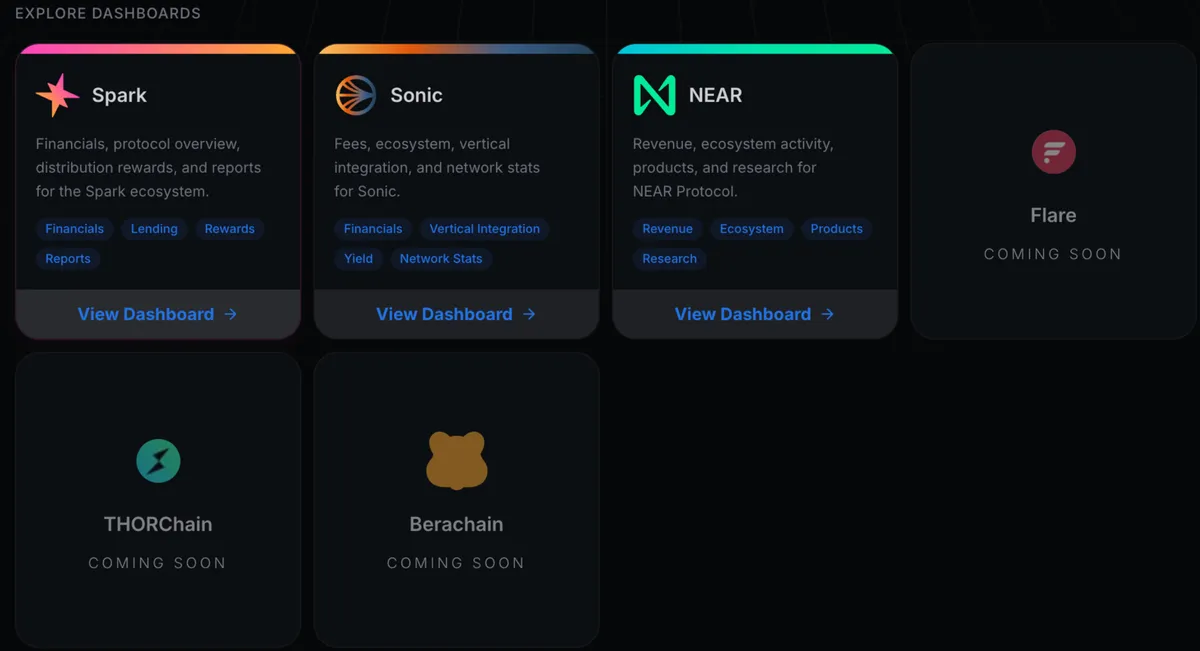
Near’s IR dashboard is a case study in the value of highlighting bespoke data. It shows that Near Intents has become a key hub for trading ZCash, a cryptocurrency that took off in 2025 as interest in privacy-preserving blockchain technology surged.
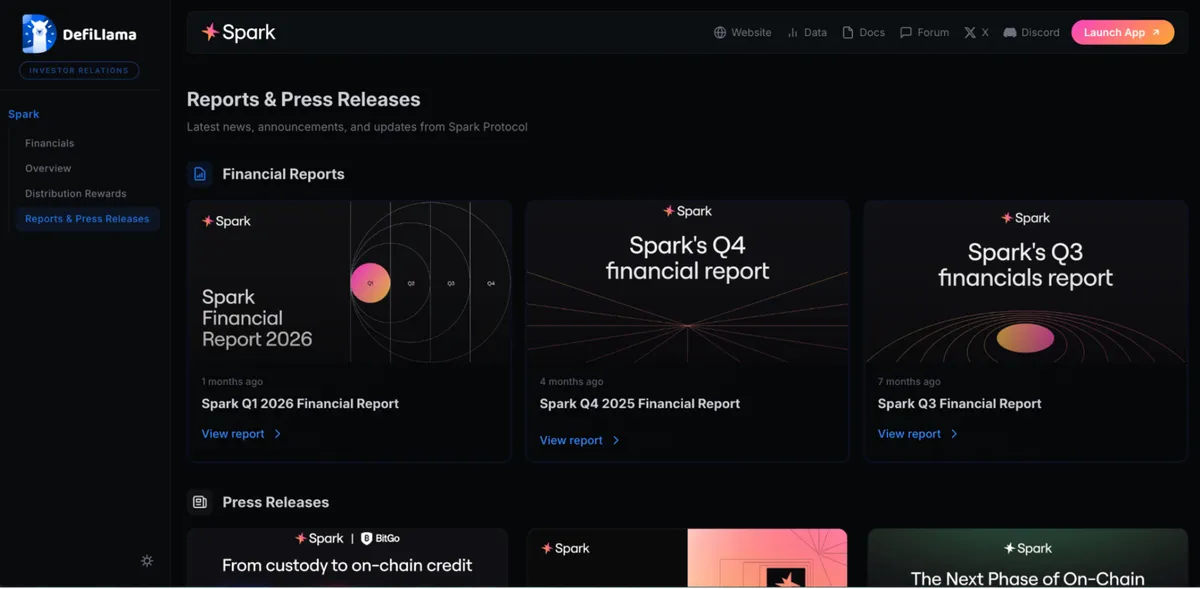
But DefiLlama’s investor relations dashboards offer more than data. They are a one-stop shop for client information. That means they’ve been integrated with DefiLlama Research, and offer quick access to all reports, deep-dives, press releases, and other key documents.
This information is key to making sound investment decisions. After all, investors need context to make sense of data. They need to understand where a project fits into the broader crypto ecosystem, and what narratives might propel it in the coming weeks and months.
In Spark's case, that means quarterly reports that give tokenholders a detailed look at the protocol’s business.
“It's become more important for projects to actually show tokenholders they are mindful of the value accrual in their fundamentals,” Scott said. “It's not necessarily just enough to have, like, a good whitepaper or narrative anymore.”