Hyperliquid and the RWA retention question: what the data shows
If RWA-first and Other-first wallets kept trading at the pace they arrived at, weekly active wallets should be climbing alongside the cumulative base. That's not what the data shows.
HYPE
In October 2025, Hyperliquid activated HIP-3, opening the platform to permissionless RWA Markets. Our first report found these markets pulled in real new users, 169,514 wallets, 31.7% of all new wallets between January and June 2026, but not significant revenue: RWA-first wallets generated just 8.3% of new-user fees, since they stayed confined to RWA Markets while Other-first wallets showed strong volume performance on both markets.
That left an open question: do these newly onboarded users actually stay on the platform and trade frequently? Asked simply, is retention good on both markets and for both cohorts? This follow-up uses two new datasets that track, at the wallet level, the number of active days per market and per cohort, and the time it takes wallets to cross over. The goal is to assess how each cohort behaves in its own market versus the other.
The key insight: engagement stays low for both cohorts, with RWA-first less active than Other-first, and the two cohorts remaining largely segregated by entry market, with one exception, a newly derived cohort of frequent, market-agnostic traders.
Engagement plateaus, and RWA-first lags Other-first
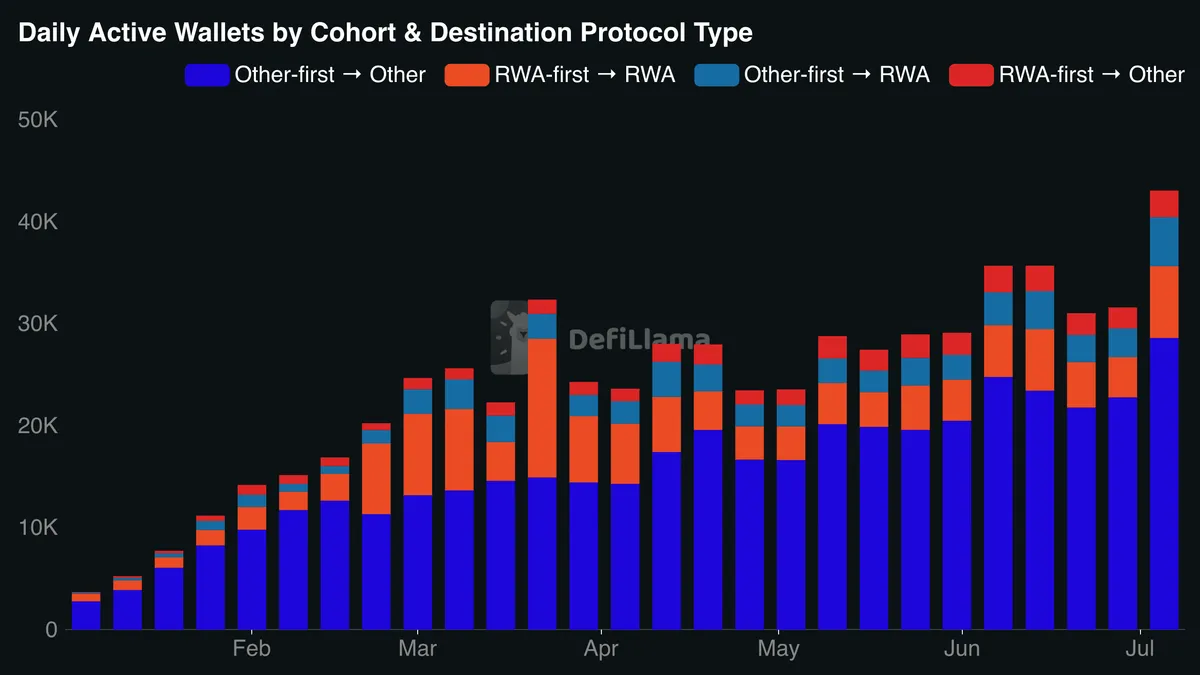
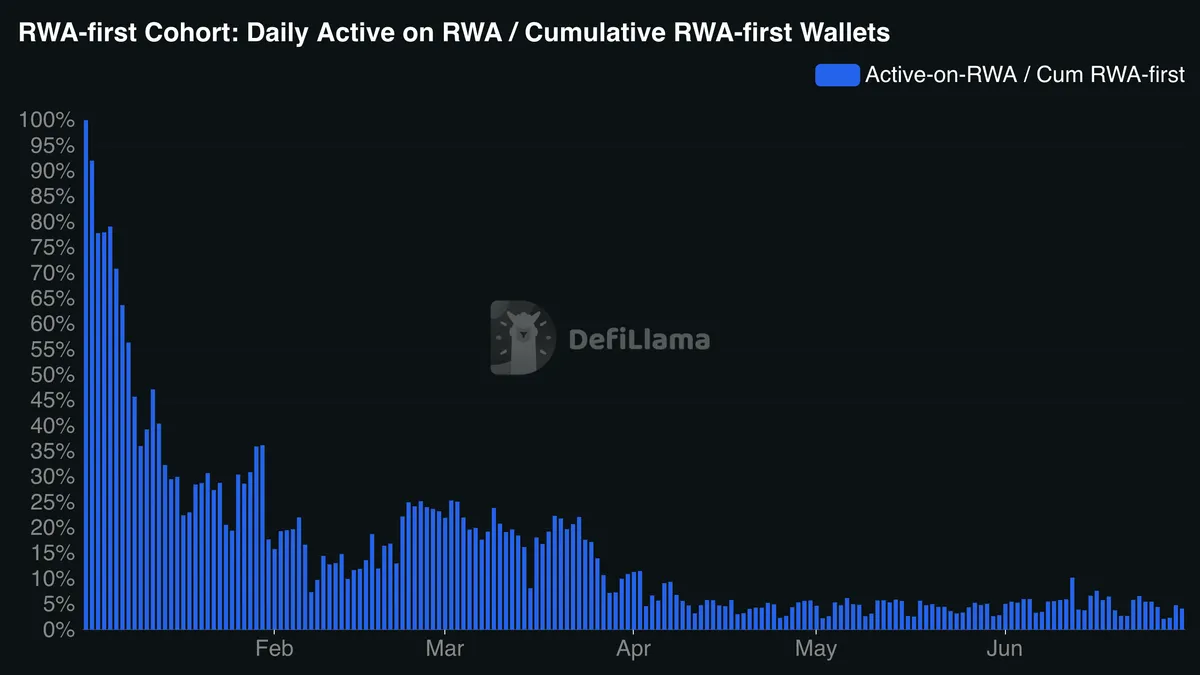
If RWA-first and Other-first wallets kept trading at the pace they arrived at, weekly active wallets should be climbing alongside the cumulative base. That's not what the data shows. Cumulative wallets grew 82.6% for RWA-first (92,830 to 169,514) and 93.3% for Other-first (188,732 to 364,781) between April and June, while weekly active wallets barely moved: RWA-first stayed between 7,000 and 12,000, Other-first between 20,000 and 33,000.
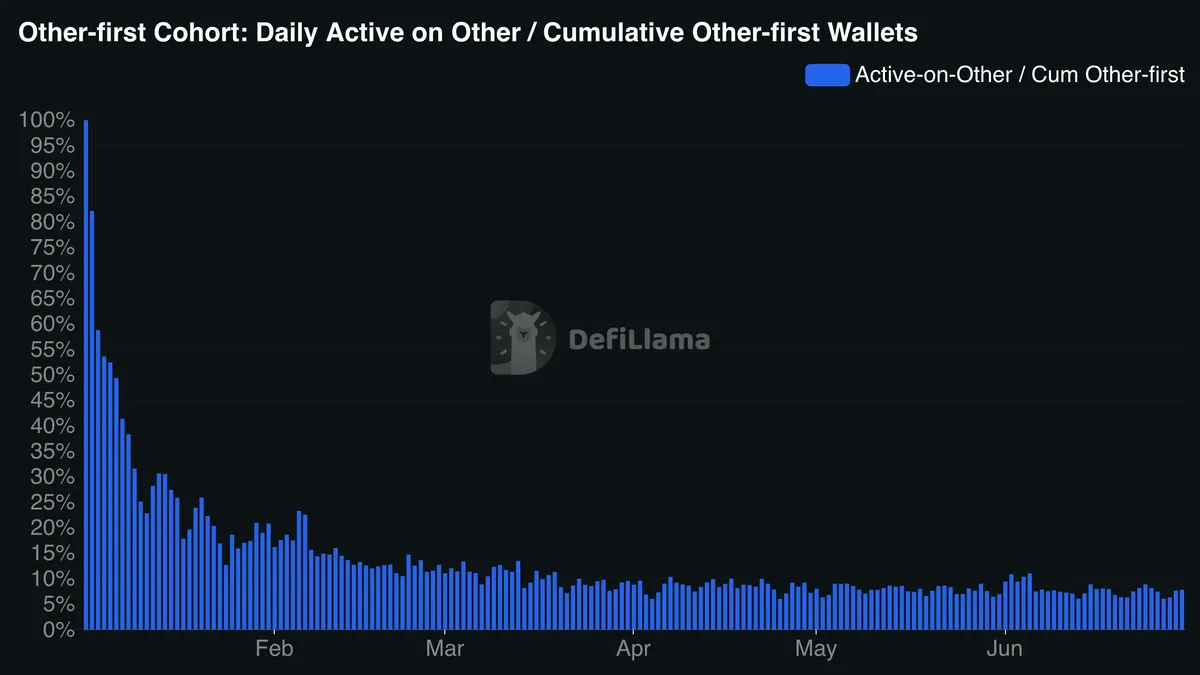
Looking at the two cohorts, if we measure daily active wallets over cumulative wallets on their own market, RWA-first averages 5.0% through the April-June window against 8.1% for Other-first. RWA traders are roughly 38% less active than Other-first traders on their respective home markets, something we hinted at in the first report.

This is confirmed by the trading frequency: nearly half of RWA-first wallets (47.4%) traded on the RWA Markets exactly once and never came back, and 68.0% traded three days or fewer over the full six-month window. Other-first wallets show more staying power: around one third (34.7%) traded once, 59.0% traded three days or fewer. And looking at high-frequency traders leads to a similar conclusion: of the roughly 13,000 wallets that traded nearly twice a week (51+ active days on their market), 10,978 were Other-first wallets (3.0% of the cohort), and 2,023 were RWA-first wallets (1.2% of the cohort).
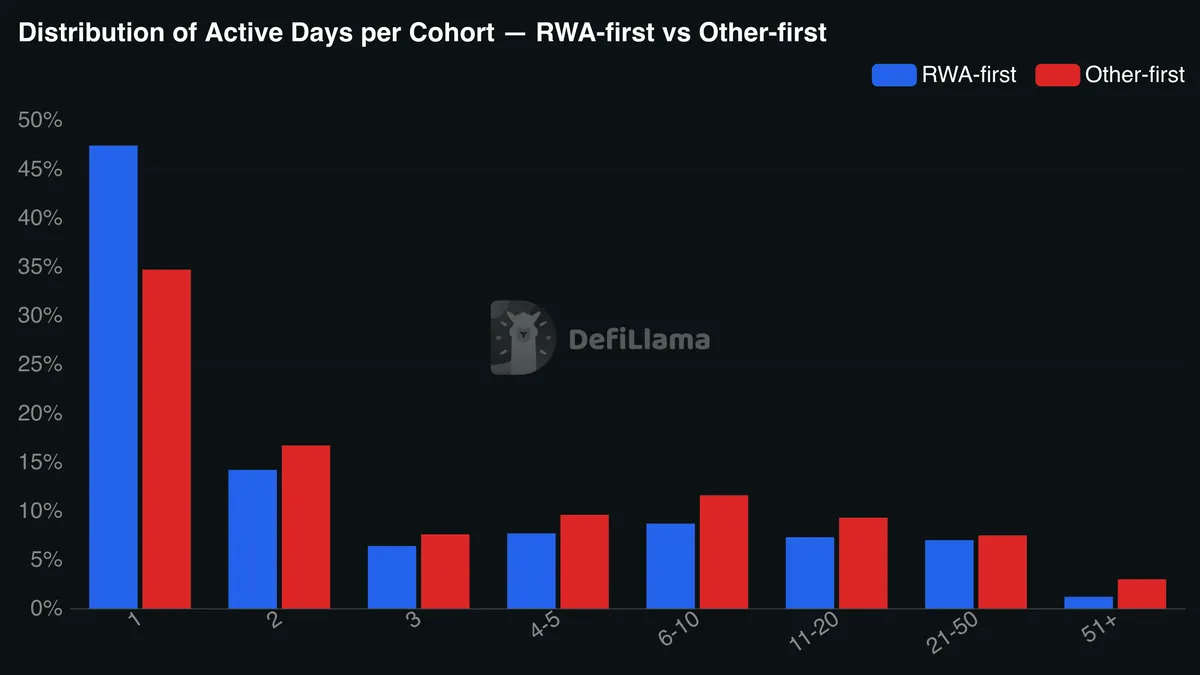
RWA-first wallets trade less often, stick around for fewer days, and make up a smaller share of the platform's most active users.
Crossing is rare but is immediate when it happens
If Other-first is the more active cohort, it should also be the more adventurous one, crossing into RWA Markets more often than RWA-first crosses into Other Markets. That's not what the data shows. 80.9% of RWA-first wallets and 82.0% of Other-first wallets have never touched the Other Markets at all, an almost identical split.
When we take a look at the wallets that do cross, we can note that the move happens fast: 31.4% of RWA-first and 32.6% of Other-first crossers do it the same day as their first trade, and 59.3% (RWA-first) and 53.5% (Other-first) cross within three days. This means that crossing is not a barrier and confirms what is said above: the crossers are global traders that are more asset-agnostic.
The overall takeaway is that most traders are asset specific: TradFi traders trade TradFi, crypto traders trade crypto. The ones who cross show a different pattern: they are more asset agnostic, and the fact they cross within days rather than weeks suggests they don't need specific events or incentives to get on the Other Markets.
Other first crossers carry outsized weight on the opposite market
With a near-identical crossover rate, we might assume both cohorts weigh the same on the market they cross into but that assumption ignores absolute size. Other-first's 65,834 crossers alone equal 38.8% of RWA-first's entire cohort (169,514), while RWA-first's 32,319 crossers amount to just 8.9% of Other-first's cohort (364,781). In other words, the Other-first wallets crossing into RWA Markets represent a meaningful chunk of that market's user base. But are these wallets active enough to matter?
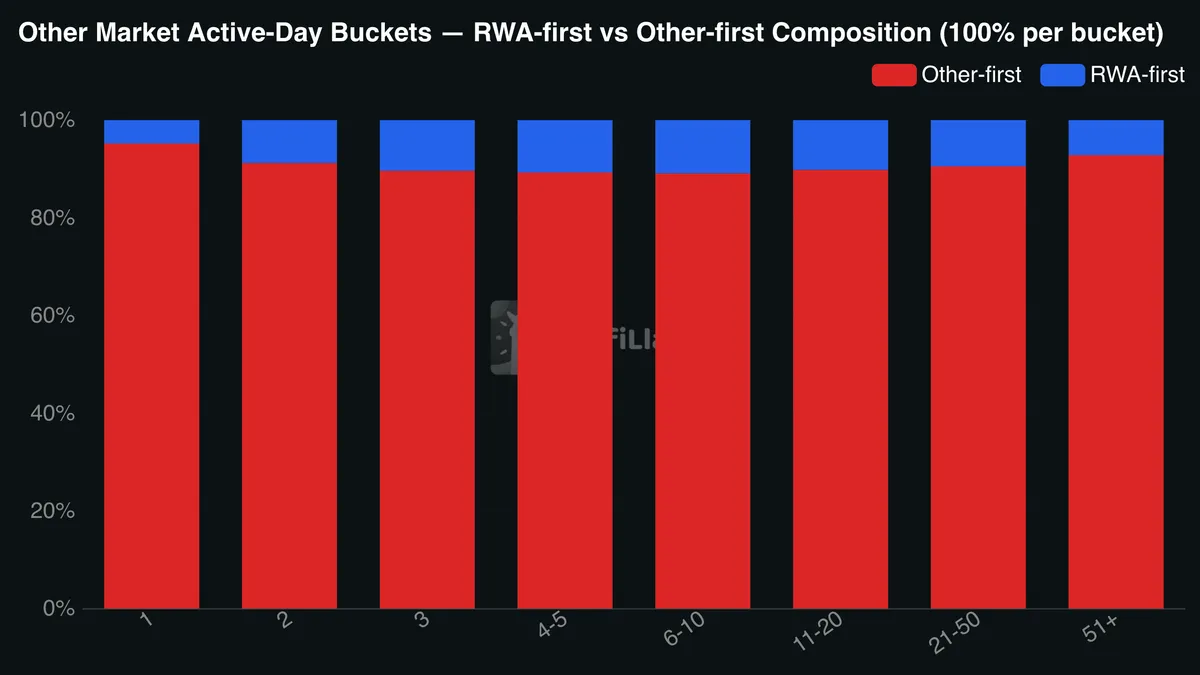
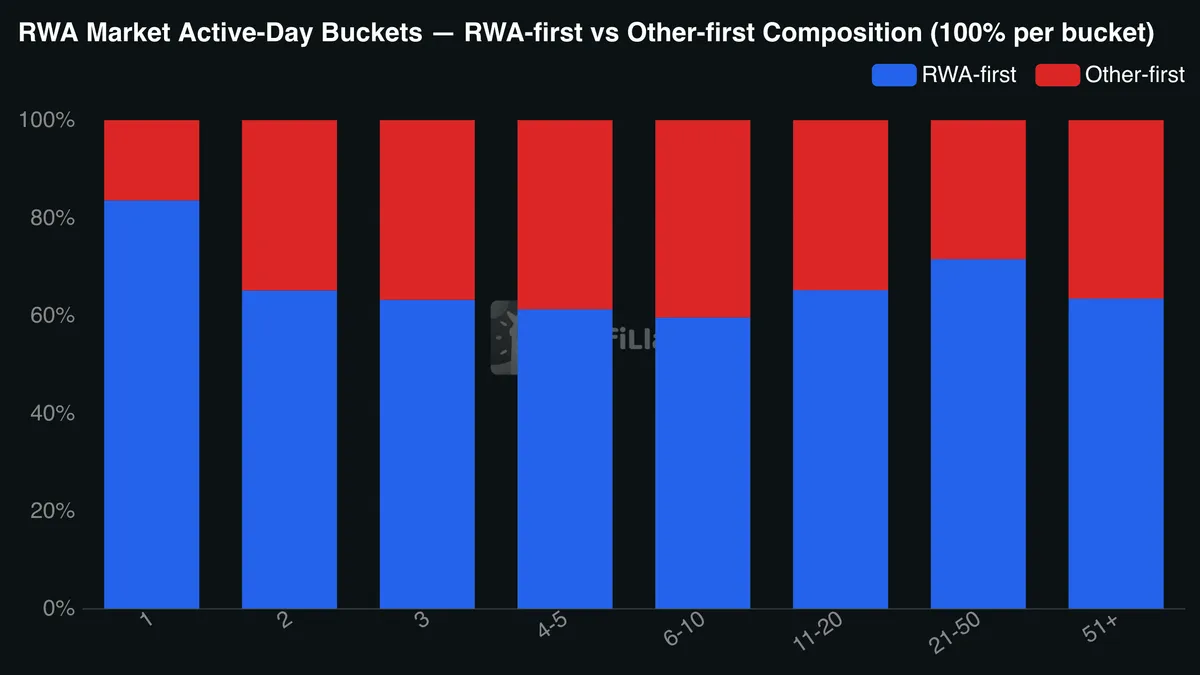
Looking at how crossers distribute across activity levels confirms they are. Other-first makes up between 30% and 40% of RWA Markets's wallets in every active-day bucket (except the first). Conversely, RWA-first's presence on Other Markets is low, staying between 5% and 11% across every bucket. The tie to the first report is direct: we found that Other-first generated roughly 40% of trading volume on RWA Markets, and that volume comes from broad participation across the cohort, not a handful of big wallets.
The busiest traders go fully agnostic
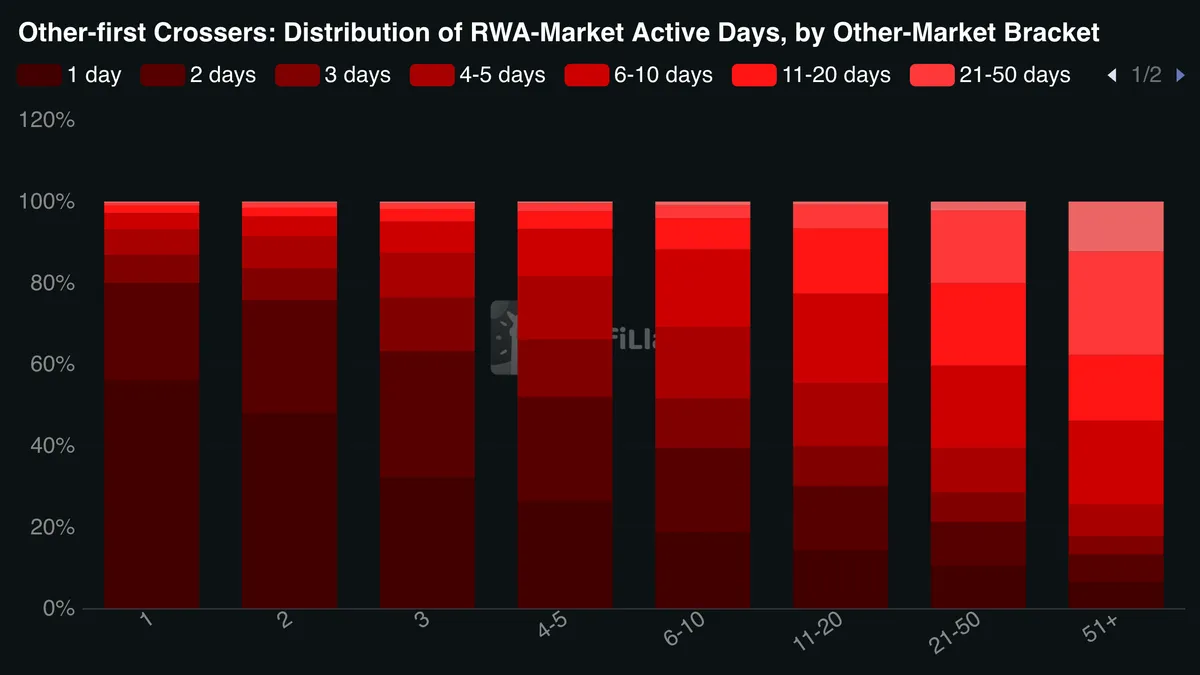
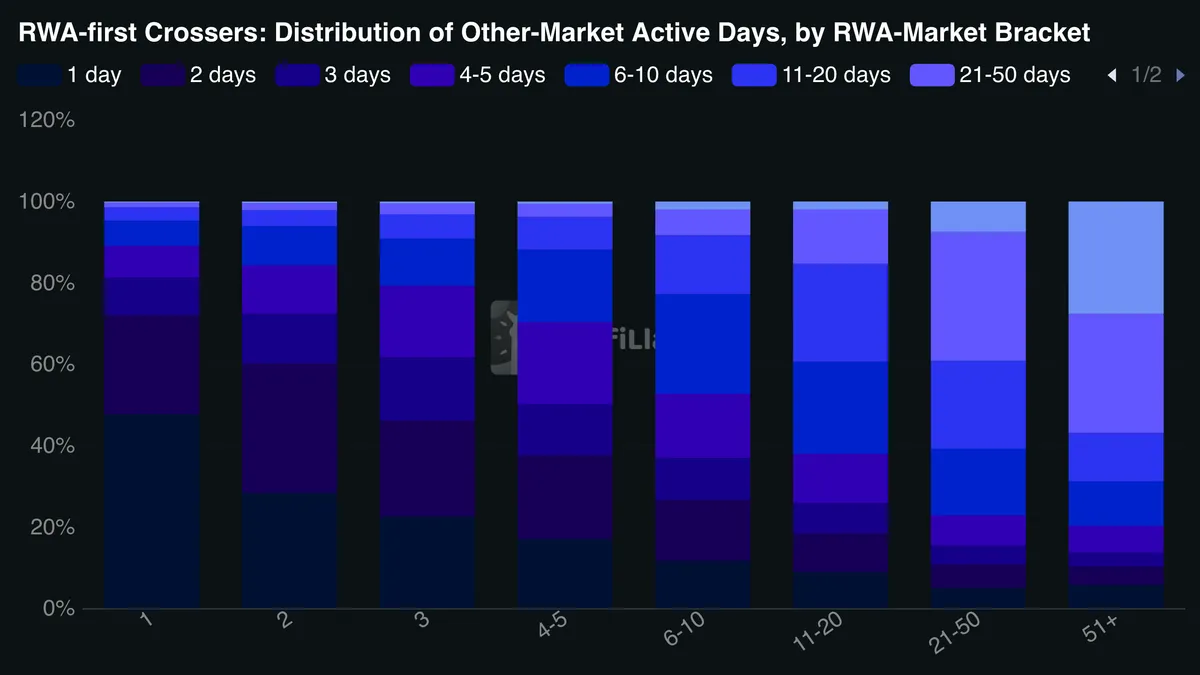
Staying focused on the crossers, frequency of trading has something interesting to tell us: as trading activity rises, so does the agnostic behavior of participants, and this holds in both cohorts.
As displayed clearly in the charts, the more a cohort trades on its market, the more it trades on the other one. Among RWA-first crossers who trade 51+ days on RWA market, 58.2% also trade 20+ days on Other Markets, and among Other-first crossers who trade 51+ days on Other Markets, 53.8% also trade 11+ days on RWA Markets. That pattern reverses almost completely at low frequency.
The takeaway is that the most frequent traders are asset agnostic and trade across both markets, leading to the definition of a third, smaller cohort in our dataset: the Frequent Traders who treat RWA and crypto as just assets, without real preferences.
Conclusion
Retention stays low across the board, and RWA-first lags Other-first on every measure, number of daily active wallets, engagement rate and trading frequency. Most wallets in both cohorts, over 80%, never touch the market they didn't enter through, and the ones that do decide within days, without the need of incentives or market events.
But those crossers matter more than their share suggests. Because Other-first is more than twice the size of RWA-first, its 65,834 crossers alone equal 38.8% of RWA-first's entire cohort, a broad enough footprint to explain the volume weight the first report found on RWA Markets. And as we move into the higher end of the trading-activity spectrum, the concept of RWA-first and Other-first makes less and less sense, leading to the finding of a third, smaller cohort composed of high-frequency traders who treat RWA and crypto as one and the same.
Three cohorts, not two, is the headline here: RWA-first and Other-first traders who stay largely market-specific, and a frequent-trading core that's genuinely asset agnostic. The next step is looking at what that core actually trades, position size, duration, and leverage, to see whether it's also the most valuable one.