TechWaves PR founder on why institutional DeFi has a communication problem
"In DeFi, credibility comes from making complexity legible without hiding the risk, not from sounding bigger than you are. That is what institutional audiences respect."
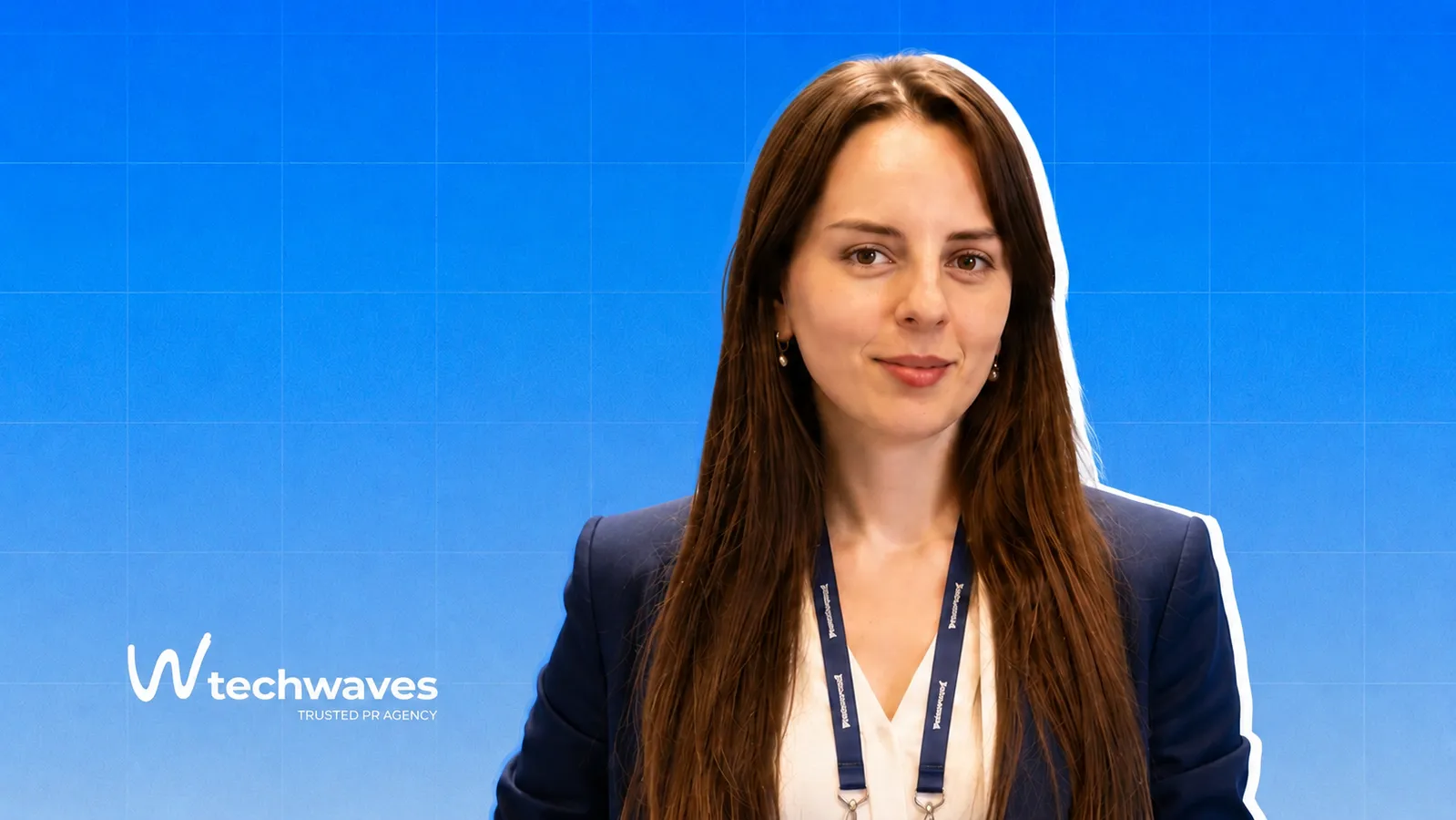
- You work with crypto and infrastructure companies where the technology is complex. In institutional DeFi, most conversations focus on regulation, liquidity, and infrastructure, but you argue there is another bottleneck. What is it?
A lot of DeFi founders assume that if the product is technically strong, the market will eventually understand it. But that’s not how institutional adoption works. A fund, market maker, custodian, fintech, exchange, or enterprise partner does not make a decision because one person “gets it.” The decision usually has to survive several internal conversations with risk, compliance, legal, finance, product, and sometimes the investment committee.
So the real communication challenge goes beyond explaining what the protocol does. Different people inside the same organization also need to understand why it matters, why it matters now, and why it is safe enough to evaluate it.
This is especially important in DeFi because the categories are still difficult for traditional finance teams to map. Is the product an infrastructure layer or a trading platform? A settlement rail or a liquidity protocol? A yield strategy or a tokenized asset platform? When every stakeholder answers that question differently, the opportunity stalls.
That is why I see communication as part of the adoption infrastructure. Institutional DeFi needs both better products and clearer translation between technical architecture and institutional decision-making.
- You draw a line between visibility and understanding. Why is this distinction so critical for technical founders?
Visibility in deep tech is a vanity metric. It tells you how many people saw something not how many understood it well enough to repeat it to a colleague without getting it wrong. For institutional deals, only the second one moves the needle.
In consumer crypto, visibility still converts into liquidity. But that loop is broken in B2B tech. A buyer rarely onboards a vendor because they saw a viral thread. The decision usually happens when three different people on their team — security, compliance, and procurement — independently arrive at the same understanding of the product. If those three read the same materials and arrive at three different interpretations, the deal dies at the committee level. Quietly. Without feedback to the founder.
That's why I look at communications not as reach but as consistency of interpretation.
- From a communications perspective, why do technically strong DeFi companies still struggle to move institutional conversations beyond initial interest?
From my perspective, the challenge often comes down to translation. Institutional teams may be curious about DeFi, but curiosity does not automatically become internal confidence, budget, or approval.
This is where many DeFi companies underestimate PR. They think media coverage is just awareness. But in institutional markets, credible public materials become part of the background layer around the company. The founder’s public profile on LinkedIn and serious media coverage also matter because institutional audiences often look at the company and also at the people behind it.
It does not replace audits, legal review, due diligence, or risk assessment. Instead, it adds a layer of credibility that makes the company easier to take seriously.
- What does institutional credibility look like in DeFi compared with general market awareness?
General market awareness is broad. Institutional credibility is specific.
For DeFi companies, institutional credibility is built through repeated, consistent explanations across serious channels.
That means the founder interviews need to do more than describe the product as innovative. They should also explain the market problem clearly. Company commentary should also go beyond celebrating growth and show how the team thinks about risk, liquidity, security, regulation, and market structure. And media strategy must move past chasing announcements. Its job is to make the company easier to understand for the exact people who influence adoption.
In DeFi, credibility comes from making complexity legible without hiding the risk — not from sounding bigger than you are.
That is what institutional audiences respect.
- How should DeFi founders communicate risk without weakening their own positioning?
They should stop treating risk as something to avoid in public communication.
Institutional audiences know DeFi has risk. They know there are smart contract risks, oracle risks, liquidity risks, governance risks, regulatory risks, custody risks, and market structure risks. If a founder pretends those risks do not exist, they immediately lose credibility.
The stronger approach is to explain how the company thinks about risk.
For example: What assumptions does the protocol make? What is minimized on-chain and what is handled off-chain? How are counterparties protected? What happens during volatility? How does the team approach audits, monitoring, liquidity, governance, and integrations? What still needs to mature across the category?
You might think this makes the company look weaker, but it actually does the opposite: it makes the company look institutionally literate.
The founders who win trust are not the ones who say, “There is no risk.” Trust comes from a clear explanation of the risk, evidence of what has been done to reduce it, and honesty about what the market still needs to solve.
That kind of communication is much more powerful than hype because it mirrors how institutional buyers actually think.
- What role does founder communication play in institutional DeFi? Is this just personal branding?
No. In institutional DeFi, founder communication is part of company trust, not personal branding for its own sake.
When a founder explains the category clearly, talks honestly about technical trade-offs, and answers hard questions without becoming defensive, the whole company feels more credible. If the founder hides behind buzzwords, avoids risk, or only speaks in hype cycles, institutional buyers assume that same behavior may appear later in difficult situations.
That is why founders in DeFi need to be visible, but not performative.
This can happen through the founder’s public speaking, participation in relevant industry conversations, and consistent communication on LinkedIn. Many founders still overlook LinkedIn, but I think that is a mistake. Today, it is one of the most important B2B platforms where a founder can build thought leadership in their category, explain how they see the market, shape the conversation, and create trust before the first call with an investor, partner, or client even takes place.
But the founder does not need to become a full-time content creator. The best model is usually collaborative. The founder provides the substance: the product logic, the market view, and the technical reasoning. The communications team turns that into formats the market can actually use.
- What actually changes for a DeFi company when communication is built this way?
The starting point of every serious conversation changes.
Instead of spending the first call explaining the basics, the team can start from a more advanced place. The investor, partner, or institutional buyer has already seen the founder’s thinking. So they already understand the market problem, and they already have a basic sense of how the product fits into the category.
While it does not close the deal by itself, it makes the conversation more productive.
For DeFi infrastructure companies, public relations matters because visibility alone is not the goal. What really matters is becoming legible to the institutions, partners, and capital allocators that can actually move the category forward.