Why Nexo is betting on Argentina to lead its LATAM expansion
"Argentine users don't need us to explain what a stablecoin is or why it makes sense to save in digital dollars — they already arrive with that habit. That makes Argentina, compared with other countries in the region, a particularly mature market for this type of product."
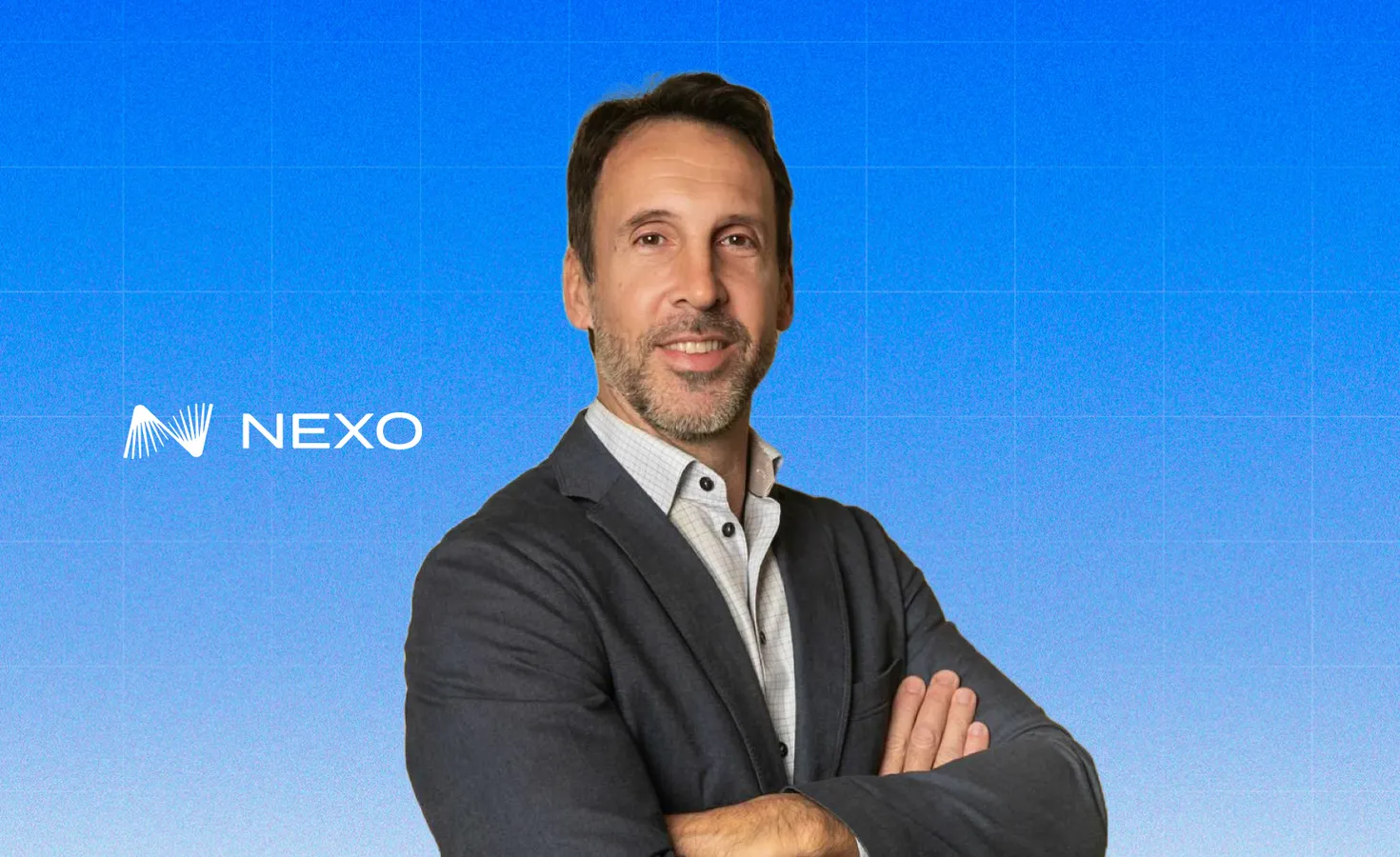
- Argentina moved $93.9 billion in crypto volume over three years and generates the highest per-capita crypto volume in Latin America. Out of every market Nexo could have picked for a LATAM hub, what made Argentina the obvious choice, and how much did the Buenbit acquisition shape the timeline versus the underlying market itself?
We chose Argentina because of how its users behave. According to Chainalysis's Global Crypto Adoption Index, Argentina leads Latin America in per-capita adoption, with close to 19.8% of the population using cryptocurrencies in some form, placing it within the global top 20 for adoption. That profile — retail, non-institutional, looking to protect against inflation and dollarize savings — is exactly the profile our value proposition is designed to serve: daily-interest savings, crypto-backed credit, and now the Nexo Card.
There's an additional point that doesn't always show up in volume statistics but was decisive for us: Buenbit already offered its more than one million users the ability to invest from very low amounts in U.S. stocks. For years, the average Argentine investor could only access fractional U.S. assets through CEDEARs, which trade in pesos and are exposed to the exchange-rate gap. Buenbit solved that friction with an account denominated directly in dollars. Finding that product already built, tested, and with real traction was a very clear signal that Argentina not only had the market best suited for us, but also the talent and infrastructure to scale it with Nexo's global platform.
On top of that, since 2024 Argentina's National Securities Commission (CNV) made registration as a Virtual Asset Service Provider (VASP/PSAV) mandatory to operate legally in the country. Buying a platform that was already registered and licensed — with a clean track record and an established user base — allowed us to enter much faster than if we had started the licensing process from scratch. In short: the market explains why Argentina; the acquisition explains why we were able to move at the speed we did.
- Nexo entered Argentina by acquiring Buenbit rather than registering as a PSAV from scratch. Was that regulatory shortcut the deciding factor in choosing Argentina over other LATAM markets, or did the $93.9 billion in three-year volume and the $2,041 per-capita figure (highest in the region) matter more?
One thing is why we chose Argentina, and another is why we chose to enter by acquiring rather than registering ourselves.
We were going to bet on Argentina regardless: the size of the market and, above all, the intensity of use — the enormous local habit of using stablecoins as a savings tool rather than for speculation — already justified it on their own. What determined the form of entry was purely regulatory. Registering a VASP from scratch involves meeting minimum net-worth requirements, custody policies, compliance and cybersecurity standards, and going through the CNV's approval timelines. Acquiring Buenbit, which was already registered and had a clean operating track record, saved us that time and that risk, and allowed us to start operating with the regulatory confidence already built in. But it wasn't just a licensing matter: the appeal we saw in Buenbit's platform, with a solid track record and a value proposition that resonated strongly with Argentine users, was equally decisive. That already-built product, together with the regulatory registration already obtained, helped us accelerate our expansion into a market that is so strategic and such a priority for Nexo.
- Argentina has one of the most stablecoin-native user bases in the world, with the vast majority of exchange activity happening in dollar-pegged assets. How has building for Argentine users shaped the way Nexo thinks about its products globally? Is this a market that's pulling Nexo's roadmap forward rather than the other way around?
The influence runs in both directions, and that's actually the interesting part. Daily-interest digital-dollar savings and crypto-backed credit already existed on Nexo's global platform before we arrived in Argentina. What changed here was how we communicated it and what local rails we built so a user could move in and out of those products from a local bank account without friction: for example, in addition to being able to fund the account with pesos, we recently launched local dollar rails, which allow moving dollars between a local bank account and the platform instantly — something designed specifically for the logic of the Argentine saver.
But it's also true that Argentina is serving us as a testing ground. Our intention is, building on this experience, to expand into other markets with similar dynamics — high inflation, capital controls, the need for dollarization — and that includes both products and narrative. Argentina isn't rewriting our global roadmap, but it is accelerating and validating it under real conditions, with a level of usage that few markets in the world have. That learning is part of what we now want to bring to Peru and Mexico.
- The digital dollar savings product is being positioned as an upgrade on the traditional plazo fijo. What was the reaction from Argentine users when Nexo introduced it, and what does that tell Nexo about how ready this market is for crypto-native savings tools compared to other countries it operates in?
We officially launched the product in March 2026, presenting it, without overstating it, as an alternative to the traditional fixed-term deposit: stablecoin savings with daily interest credited automatically and no minimum terms, with immediate availability of funds, and a yield that at the time stood around 13% annual in dollars — above the average for local fixed-term deposits and mutual funds, which were around 8% annual at the time. As part of the launch, we lowered the entry threshold for our loyalty program's welcome benefit (Platinum tier) to a deposit of US$1,000 within the first seven days, so that more users could access a benefit originally aimed at higher-capital users.
The reception was very positive and faster than in other markets where we operate: Argentine users don't need us to explain what a stablecoin is or why it makes sense to save in digital dollars — they already arrive with that habit. That makes Argentina, compared with other countries in the region, a particularly mature market for this type of product.
- Nexo became the AFA's regional digital asset partner for what turned out to be a massive year for Argentine football. Looking back at the World Cup now that it's behind us, what did that partnership deliver for Nexo, and how did the AFA relationship change the way Argentines think about the brand?
In April 2026 we became the Official Regional Digital Assets Partner of the Argentine national football team for South America, a one-year agreement that included ticket giveaways for Argentina's World Cup matches, signed jerseys, and content with national-team players. We chose to partner with the Argentine national team because we share the same values: discipline, ambition, and the idea that you can always go further are the same principles we built Nexo on. Beyond the sporting result — Argentina reached the World Cup final, which remains a source of pride for the whole country — for us the value of this partnership never depended on a single result, but on something deeper: it allowed us to humanize and localize the brand, to show that Nexo understands and shares what matters to Argentine people, to show that behind the platform there's a local team, of Argentines, working every day so that other Argentines have better financial tools, and to associate ourselves with a symbol that brings together millions of people regardless of whether they already use crypto or not.
The partnership with the AFA was consistent with our local strategy: it wasn't generic advertising, but about building a long-term relationship with a country that has already chosen digital assets as part of its everyday financial life. That's why our campaign was built around that idea of continuity and progress — "always moving forward" — and the constant pursuit of the next generation of champions, both on the field and in the way we think about the future of digital finance in Argentina. We feel inspired by those who always go further.
- Banks are expected to start offering crypto services in Argentina once the BCRA lifts its restriction. Does Nexo see that as validation of the market it's already built in, and what does it want its role to look like once that happens?
It would be great news for the whole ecosystem, and yes, we would read it as validation. If the Central Bank decides to lift the restrictions that currently prevent banks and payment service providers (PSPs) from offering crypto, it's because the market that platforms like ours built over years of restrictions has already shown demand solid enough for traditional banking to want to get involved. And that, ultimately, is good for the user: more access, more competition, and more opportunities for more people to benefit from what digital assets offer.
We don't see it as a threat to what we've built, but as the next stage in this market's maturation.
- Buenos Aires is now Nexo's hub for expanding into Peru and Mexico. What is it about what's been built in Argentina that Nexo is most excited to bring to the rest of the region?
What excites us most is having proven, with real numbers rather than just hypotheses, that a digital-dollar savings product with a strong local narrative — positioned against traditional savings instruments people already know, like the fixed-term deposit — can drive mass adoption in a market under currency stress. That learning, together with the experience of building local rails in domestic currency to reduce onboarding friction, and a brand strategy with cultural grounding like the one we had with the AFA, is exactly the combination we want to replicate in Peru and Mexico.
These are markets with their own dynamics: Mexico, according to Chainalysis, is the region's third-largest market by volume, and Peru, though smaller, is growing strongly. In both cases the pitch is similar to Argentina's: access to better dollar rates, wealth diversification, and, over time, the ability to move money between countries in the region more simply. Buenos Aires functions as the center from which we coordinate that expansion, drawing on the team and the knowledge we've already built here.

- If everything goes right for Nexo in Argentina, what does the company look like here in five years, and what role does Nexo want to have played in Argentina's crypto story by then?
I think we're already seeing it, and that gives us a lot of confidence about where we're headed. In five years, we picture Buenos Aires consolidated not only as the hub toward Peru and Mexico, but as a relevant decision-making center for all of South America. We also picture much deeper integration between crypto and the traditional financial system, and Nexo as one of the reference players in the convergence of financial solutions that let users manage their assets through comprehensive offerings and access to more efficient products.
The challenge ahead of us is staying differentiated from other local and international exchanges competing for the same dollarized audience, and the way to achieve that is by keeping doing what got us here: listening to what the Argentine saver needs before anyone else, building products from that, and then bringing them to the rest of the region. If in five years people associate Nexo with having helped millions of Argentines preserve the value of their savings in a simpler and more transparent way, we will have fulfilled the role we set out to play.