VALR Co-Founder on building inclusive crypto infrastructure and the next frontier of finance
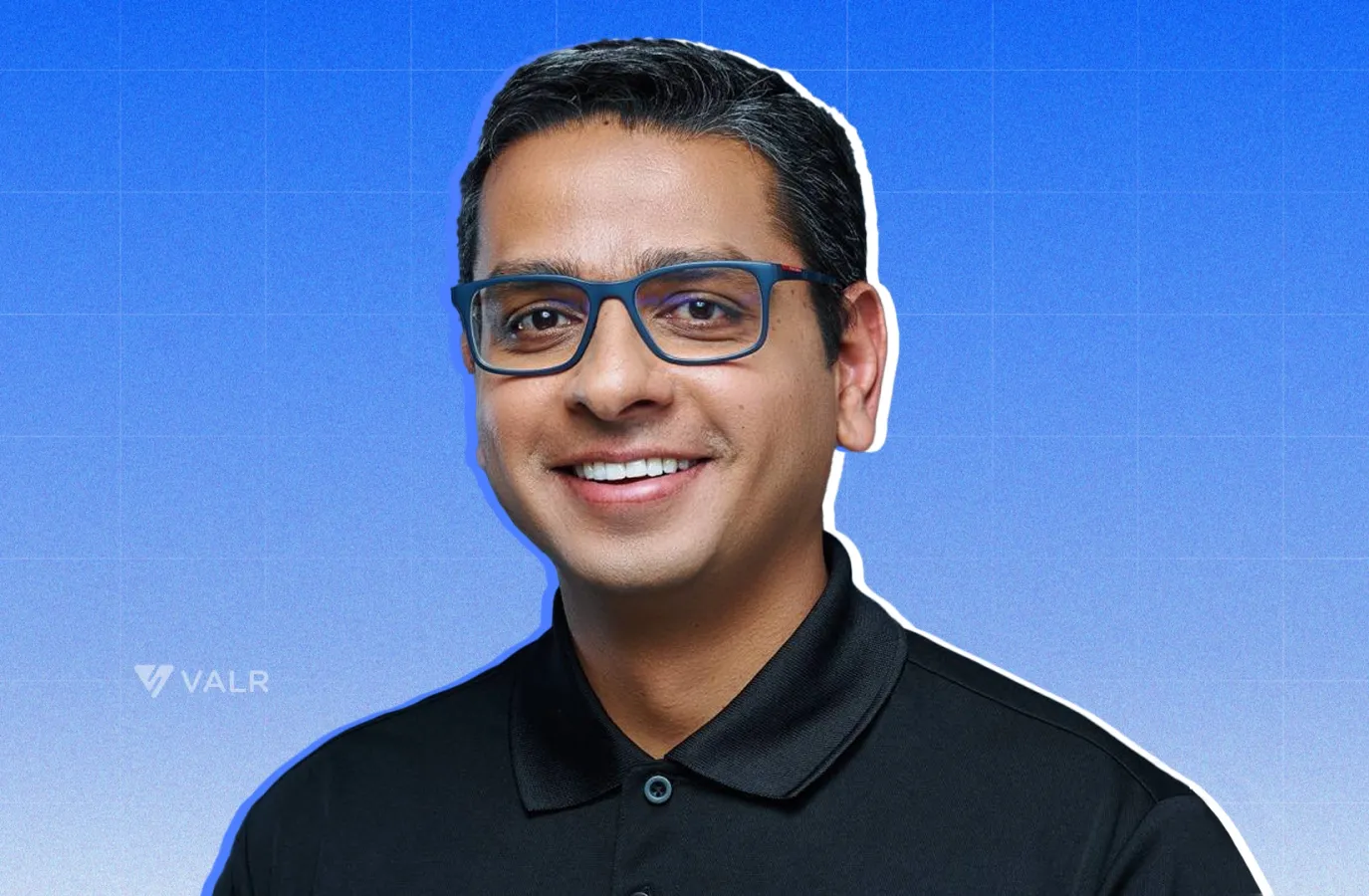
We recently spoke with Badi Sudhakaran, Co-founder and Chief Product Officer of VALR, about the platform’s mission to revolutionise finance and how they are bridging the gap between retail simplicity and institutional sophistication.
VALR recently secured an OTC Derivatives Provider licence in South Africa, positioning it to expand its offerings into regulated structured products. The platform is dedicated to building a financial system that transcends borders, serving everyone from rural farmers to global hedge funds with equal respect and excellence.
Read more about VALR’s product philosophy and future roadmap in the interview below.
- From a product perspective, how does the idea of “revolutionising finance for humanity” influence what you build, what you prioritise, and what you choose not to pursue?
At VALR, product decisions flow through a filter: “Does this bring us closer to financial systems that transcend borders and serve all of humanity with equal dignity?” This serves as one of our core principles for prioritisation.
We aim to understand user needs across our market, whether they are making their first $10 investment or institutional traders executing complex strategies. Take our Crypto Bundles as an example: we recognised that portfolio diversification shouldn’t require a finance degree. We prioritise building products that remove barriers and solve real problems for investors at all levels.
Another non-negotiable principle for us at VALR is that we never build products that exploit information asymmetries or extract value from less sophisticated users. We do not gamify trading into entertainment at the expense of financial well-being. And when we partner with others, we always ask: “Does this serve the collective good, or extract from the vulnerable to benefit the powerful?”
The principle of the oneness of humanity serves our overall product strategy. A farmer in rural South Africa deserves the same quality of financial infrastructure as a hedge fund in London. Our users become advocates not because of marketing but because they have experienced products that genuinely serve them with integrity and excellence.
- You now serve more than a million users and nearly 1,800 institutional clients. What are the biggest product tensions you face when balancing simplicity for beginners with the advanced functionality required by professional traders?
This is perhaps the most elegant tension in product design. We believe that everyone should have access to the same core infrastructure, simply via different interfaces tailored to their needs. Our product approach supports this through ‘progressive disclosure’: gradually revealing complexity as users demonstrate readiness.
A new user encounters a simple interface centred on core actions: buy, sell, store. As they progress, extra features appear naturally. The professional trader can skip all this and go straight to advanced trading views or API access. Same infrastructure, different starting points.
The real tensions we face include balancing feature complexity with interface simplicity, onboarding friction with compliance requirements, and education with overwhelm. Our solution is a well-designed information architecture: advanced features are placed in clearly separated sections that beginners naturally avoid, while professionals can access them instantly.
For institutional clients, our API offers an elegant solution. They do not need to interact with our consumer interface at all. They craft precisely the experience they require while accessing our liquidity and infrastructure. This allows us to keep the web interface optimised for retail users while serving institutional needs programmatically.
- Crypto Bundles were introduced to make investing simple. How did you determine the methodology behind VALR10, including asset caps, monthly rebalancing, and the exclusion of stablecoins? What signals will guide the creation of future thematic bundles?
We studied traditional index funds, such as the S&P 500, and diversified bond funds, and asked what makes them successful for mainstream investors. The answer: they remove the burden of selection and timing while providing broad exposure. We aimed to bring that same simplicity to crypto.
Market cap as our selection criterion serves multiple purposes: it is objective and verifiable, ensures liquidity for efficient rebalancing, and reflects collective market wisdom about which projects have demonstrated staying power. “The 10 largest cryptocurrencies” is immediately understandable; users do not need to trust our judgment.
The 40% asset cap addresses a specific challenge:
Bitcoin often accounts for 50-60% of the total crypto market cap. Pure market-cap weighting would lead to a Bitcoin-heavy portfolio, defeating the purpose of diversification. The cap ensures meaningful Bitcoin exposure while guaranteeing substantial allocation to other major assets. Monthly rebalancing makes the fund responsive enough to capture significant market shifts, infrequent enough to minimise transaction costs, and provides predictable timing for users to plan around.
We deliberately excluded stablecoins. Bundles are investment products aimed at capital growth. Stablecoins are meant for stability. Including them would weaken the investment thesis and result in a product that is neither a cash alternative nor a growth vehicle.
For future thematic bundles, we are monitoring several signals: user growth, coherent investment narratives (DeFi, Layer 1s, AI crypto), sufficient liquidity within categories, and most importantly, clear user demand demonstrated by manual portfolio construction patterns. We will not create bundles just because we can, but only when they meet genuine user needs backed by methodologies we can defend both intellectually and operationally.
- VALR recently secured an OTC Derivatives Provider (ODP) licence in South Africa. How does regulated access to CFDs, options, and swaps change your roadmap for derivatives products for both retail users and institutions?
This licence is crucial not just for VALR but for the entire African crypto ecosystem. South Africa has established one of the world’s most comprehensive crypto regulatory frameworks, placing us in rare company globally. We are developing derivatives products within a transparent legal structure that safeguards users and fosters institutional confidence.
VALR already offers perpetual futures trading, which has proven valuable for both retail and institutional clients. Retail traders use them for leveraged exposure and to hedge spot positions, while institutions leverage them for strategies such as basis trading and portfolio risk management. The perpetual futures market provides the liquidity and price discovery that benefit the entire ecosystem.
The ODP licence now enables us to expand beyond perpetuals into a wide range of structured products. We are still in the early planning stages for these offerings, but one example we are particularly enthusiastic about is covered options. In simple terms, covered options allow users to generate income from crypto they already hold; you earn premiums while maintaining your position, creating yield opportunities beyond just holding or staking.
These new instruments will complement our existing products, opening up opportunities for income generation, risk management, and portfolio optimisation that were not previously available in regulated form in Africa. For retail users, this means more ways to manage their crypto holdings. For institutions, it removes barriers to providing comprehensive crypto services within clear regulatory frameworks.
- VALR’s API has become a major access point for institutions. What unexpected or innovative integrations have emerged since deeper programmatic access became available?
When we initially developed our institutional API, algorithmic trading seemed like the obvious use. What surprised us was the wide variety of totally different applications that emerged.
Payment processors began integrating crypto payments at the point of sale, instantly converting to fiat through our API so merchants receive fiat while customers gain crypto payment options. Hedge funds built their own custom interfaces using our API, not only for client-facing portals but also for internal administration and operational management.
Multiple institutions now use our API to integrate crypto products into platforms that were previously entirely non-crypto. They are embedding crypto functionality into existing investment platforms, wealth management systems, and financial applications, making crypto accessible to users who would never open a dedicated exchange account.
FX providers realised they could leverage our infrastructure for inward remittances using what has now become known as the “stablecoin sandwich”. Stablecoins are transferred into South Africa and then converted to local currency via our API for the recipient. This approach significantly lowers costs compared to traditional remittance channels while ensuring faster settlement times. We are also observing sophisticated arbitrage trading operations built entirely on our API: firms that monitor price differences across platforms and execute automated trades to exploit inefficiencies.
Perhaps the most intriguing aspect is the use cases we have yet to fully understand. Some institutions incorporate our API in ways that address specific challenges unique to their business models or markets. Each integration not only adds value for their customers but also enhances our ecosystem.
These unexpected integrations validated our platform approach: develop reliable infrastructure, make it accessible through code, and allow innovative developers to build services we hadn’t considered. We provide the foundation others can build on, creating infrastructure that serves humanity by enabling innovations we could not develop ourselves.
- Looking ahead, what do you see as the next major frontier for VALR’s product strategy? Are you focused on more regulated offerings, deeper trading tools, new investment products, or entirely new financial primitives?
The next major frontier goes beyond any single product category. It represents the convergence of traditional finance and crypto infrastructure, enabled by regulatory clarity and driven by genuine utility. We are moving into a phase where crypto stops being just a separate asset class and becomes an integrated financial infrastructure.
We see this playing out across three key areas. First is regulated digital asset banking. Imagine a unified money management system that gives users a single view across fiat and cryptocurrencies, with seamless conversions and intelligent cash management. This includes crypto-collateralised financial services, where your Bitcoin can unlock lines of credit, mortgages, and business loans without having to sell the asset.
Second, we are focused on predictable yield products that offer the upside of crypto with greater stability. This means fixed-term structured products and automated yield strategies, such as covered calls, are finally accessible to retail users.
Third, we are building the tokenisation and payment tools for businesses. While we cannot reach every end-user directly, we can power the institutions that do. By enabling banks and fintechs to tokenise assets and use our efficient payments infrastructure, we become the invisible layer powering the ecosystem. This embedded finance approach allows traditional players to integrate our capabilities via API.
Ultimately, our prioritisation comes down to three questions: Does it serve genuine human needs? Does it advance financial inclusion? Can we build it excellently? We would rather build fewer things perfectly than many things poorly. Whether someone is managing $100 or $100 million, they deserve access to sophisticated financial tools delivered with dignity. That is the frontier worth pursuing.