Octra Bridge: the rail between public liquidity and encrypted state
The minimalist Ethereum-centric “buy & bridge” design was chosen deliberately for enhanced censorship resistance, decentralization and ease of access during the early days of the network.

In our previous article, we went through the theory of how the Octra project is able to provide privacy. Now, it is time to dive into how you can actually start using the Octra network and benefit from its privacy features.
This journey today starts on Ethereum, where Wrapped OCT (wOCT), the native token of Octra, is deployed. It starts with the bridge and ends with users being able to hold private balances and make stealth transfers.
The minimalist Ethereum-centric “buy & bridge” design was chosen deliberately for enhanced censorship resistance, decentralization and ease of access during the early days of the network. As Octra grows and OCT lists on more venues, more ways to onramp to the network will likely become available.
Bridges usually move assets. Octra's bridge moves context
To move between chains, there is usually a bridge needed to allow you to move your assets.
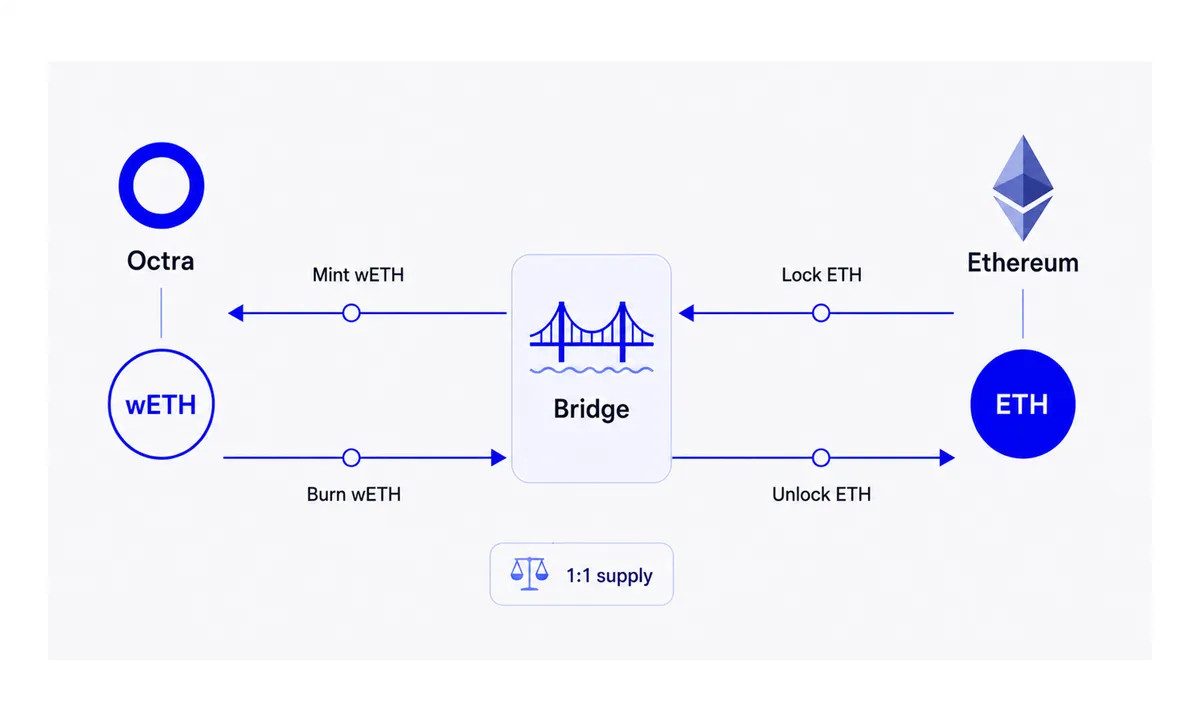
Bridges tend to work in a similar model, which is the lock-and-mint model. The user locks the original asset in a smart contract on the source chain, and a wrapped representation is minted on the destination chain. When the user wants to return, they burn the wrapped version and unlock the original.
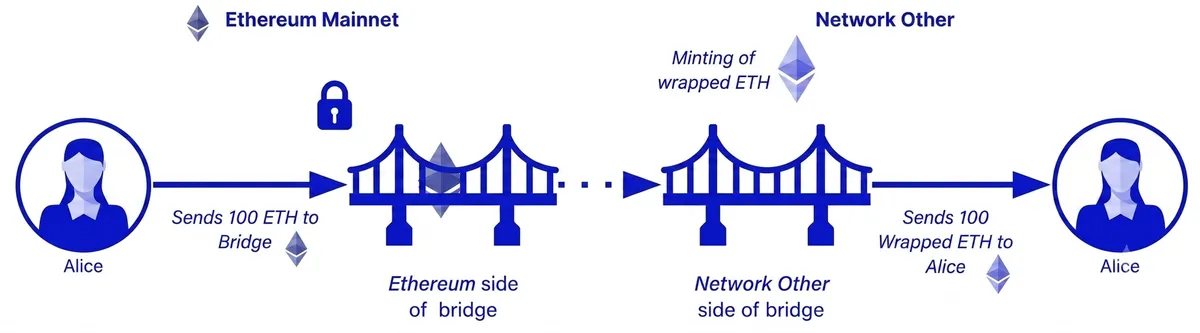

For Octra, this model is not different, but what is unique about Octra’s bridge is that instead of just moving assets between two chains that share similar rules and are both public blockchains, you move your assets into a private environment where you can encrypt and start using them privately across DeFi, apps and Octra-specific isolated execution environments (Circles).
This distinction matters because Octra is not a mixer, but instead operates on private state. All privacy features are therefore entirely optional for both users and developers.
Understanding Octra and FHE state
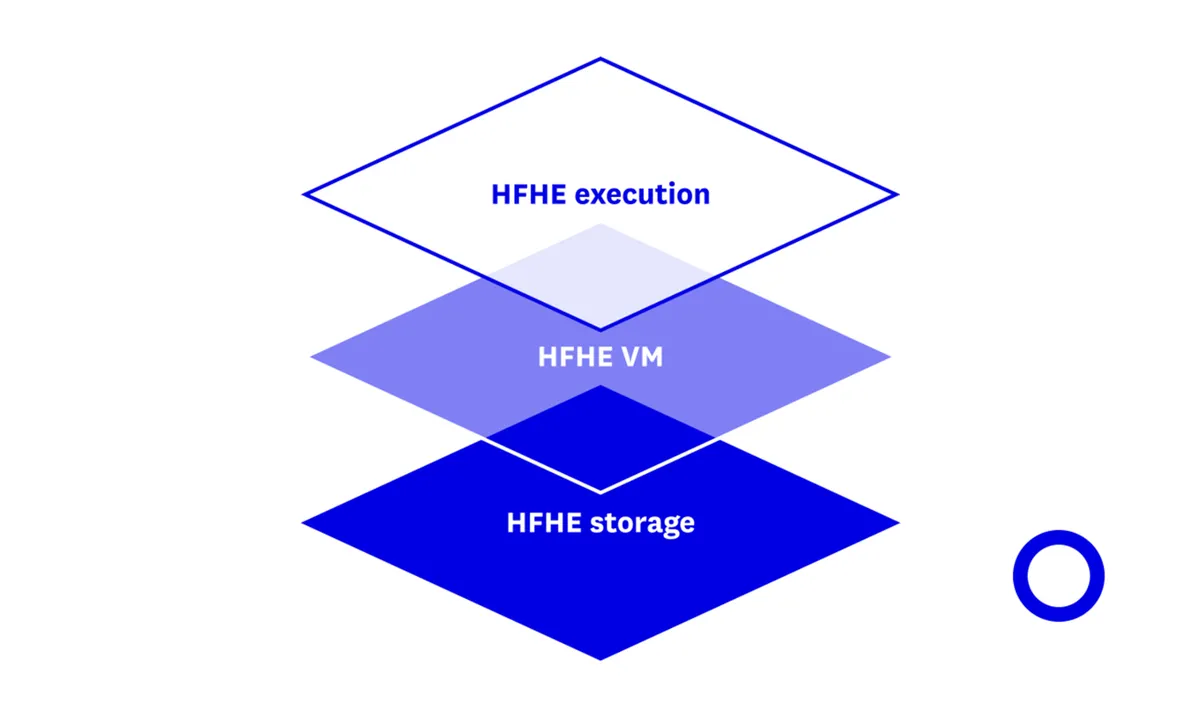
When users bridge Wrapped OCT from Ethereum to Octra, it enters the network as a simple, public plaintext native asset (OCT). The open-sourced web client then allows users to encrypt their OCT, effectively moving it to a private state powered by hypergraph FHE, Octra’s in-house encryption scheme.
The process of encrypting or shielding assets isn’t new. However, unlike major privacy solutions, such as ZCash and Monero, Octra is programmable, meaning encrypted OCT may be used in smart contracts. While simple stealth transfers from Alice to Bob do not require FHE computations, the private balance itself is encrypted using FHE to maintain composability and programmability.
Such a persistent encrypted state offers stronger and more flexible privacy, because user balances and activity can remain hidden while still being usable inside the network, instead of only being hidden for a single transfer or temporary action.
How the bridge works
Currently, the Octra bridge connects native OCT on Octra with wOCT on Ethereum through a straightforward two-way flow. It follows the lock-and-mint model discussed earlier.
When a user moves from Octra to Ethereum, native OCT is locked on Octra through the bridge vault. This lock creates a bridge message that includes the destination information, such as the Ethereum recipient address and the amount being moved.
That message is then included in Octra-side bridge data for the relevant epoch. On Ethereum, the bridge flow verifies the corresponding bridge header before the user completes the claim. Once the message is accepted, the Ethereum bridge contract mints the same amount of wOCT to the recipient.
The reverse path works in the opposite direction. A user burns wOCT on Ethereum, and the bridge processes that burn so native OCT can be unlocked on Octra.
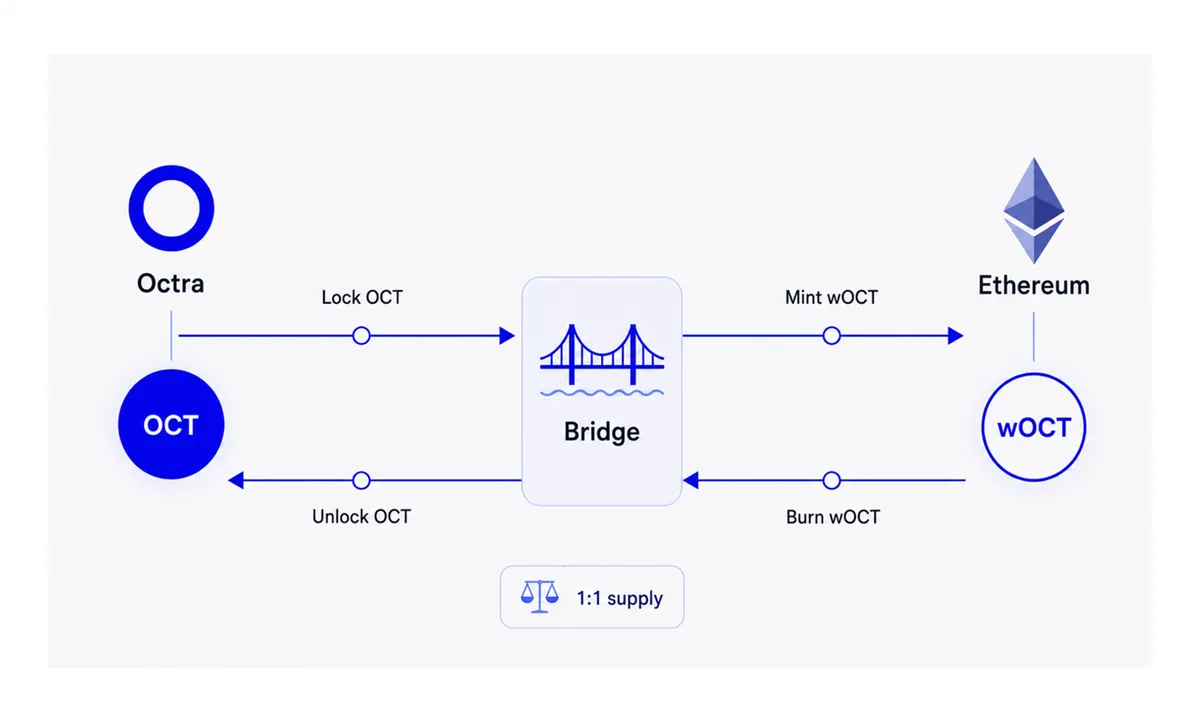
The bridge keeps OCT and wOCT connected through a 1:1 supply relationship while allowing the asset to move between environments. It does not function as a swap. Instead, it simply changes where the asset representation exists and allows users to move between the two chains.
On that note, wOCT on Ethereum is a conventional ERC-20 token. It is publicly visible, traceable, and operates within Ethereum’s rules. The bridge does not make bridging itself private, but it does allow the user to move into the private environment offered by Octra. The team has announced that a stealth bridge is in development, which would assumingly allow users to bridge to using stealth transfers.
How is this different from a mixer?
This also helps explain why Octra is different from a mixer.
A mixer is designed to break the visible link between where funds came from and where they go next. Users deposit assets into a pool, withdraw them to a new address, and rely on the pool to make it harder to connect the deposit and withdrawal. It may be argued that all privacy solutions that rely on anonymity pools are, in practice, mixers.
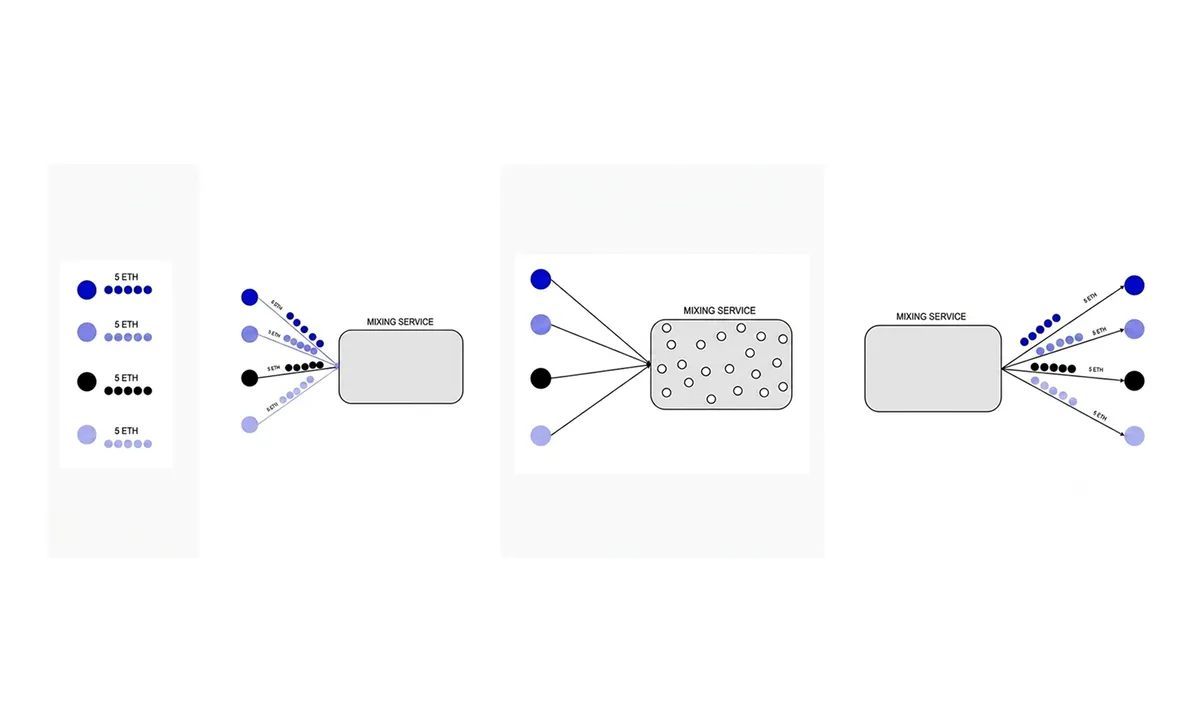
That can be useful, but it is still limited. Once funds leave the mixer and return to a public chain, the user is back in a fully visible environment. Every later transfer, swap, payment, or wallet movement can be tracked again. Even shielded assets become less useful if used by only a few parties.
Octra takes a different approach. Instead of trying to hide transaction history, it gives users a private environment where funds can continue to exist and move in encrypted form. As discussed, after bridging to Octra, users can encrypt their balance, hold private funds, send stealth transfers, receive private payments, and later decrypt funds back into a public balance when needed. The unlock happens at the application layer, where the encrypted balance can be used for trading, lending, or virtually any other DeFi primitive, as well as paying for inference, program deployment and even file storage.
Octra vs Mixer | Mixer | Octra |
Privacy mechanism | Temporary break in transaction history | Encrypted state environment |
Privacy duration | Until funds return to public activity | Ongoing, within Octra |
Requires pool activity | Yes, privacy weakens in small pools | No |
Supports private balances | No | Yes |
Supports private transfers | No | Yes |
Future outlook: Multi-asset privacy and the role of Circles
Today, the Octra Bridge is focused on OCT and wOCT. That matters because it proves the first version of the model: a public asset representation on Ethereum can be connected to Octra’s native network, where users can then access encrypted balances and stealth transfers.
The larger opportunity emerges if this model expands beyond OCT. If stablecoins, ETH, BTC, or other widely used assets can eventually enter Octra, the network could move from being a private environment for its native asset into a broader encrypted liquidity layer.
In that scenario, users would not only bridge OCT into Octra. They could potentially bring assets they already use across DeFi into an environment where balances and transfers can become private.
Beyond adding support for more assets, another path for Octra’s expansion is broader network coverage through its bridge. EVM-compatible ecosystems are the natural starting point. The current Ethereum-side model already relies on smart contracts for wrapped asset issuance and bridge verification, which means the same design could be easier to extend across other EVM environments.
HyperEVM is a useful example of where this could become interesting. Hyperliquid has grown into one of the more important L1s, with Hyperliquid L1 showing roughly $1.5 billion in DeFi TVL and a very active userbase.
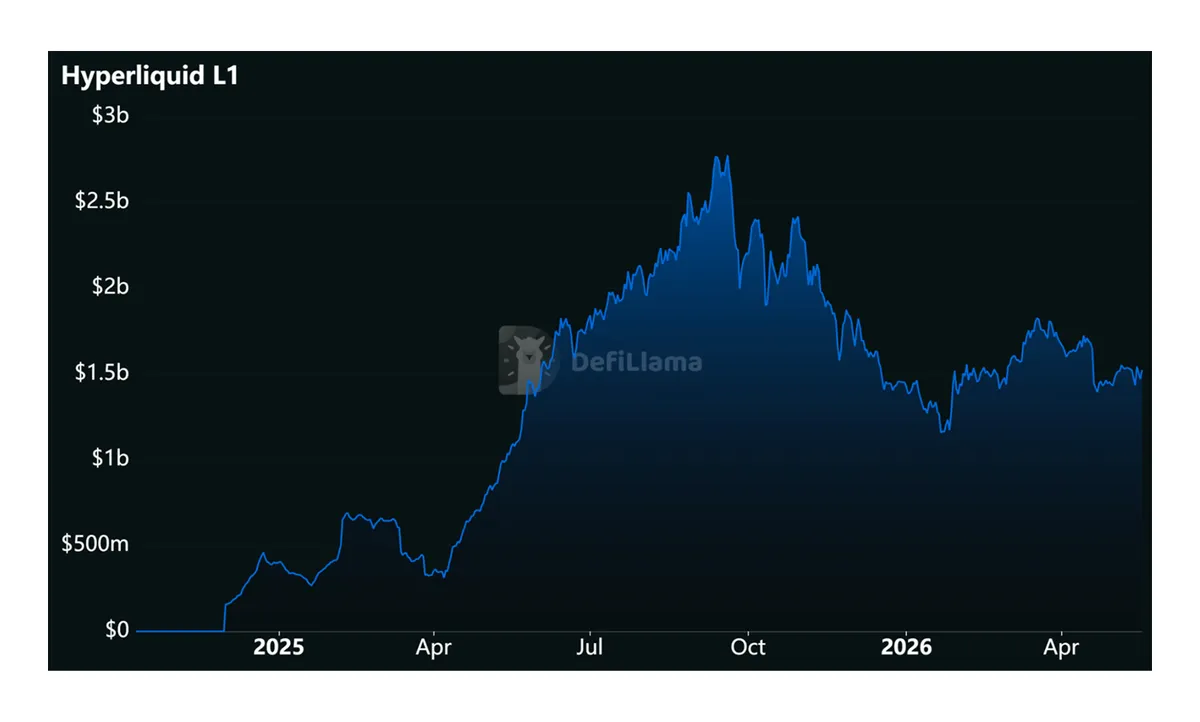
If Octra were able to connect to an environment like HyperEVM, it would not simply be adding another bridge route. It would give users a cheaper path to move assets from a large liquidity venue into a private environment where those assets could then be encrypted.
Non-EVM ecosystems such as Solana could also become possible in the future, but they would likely require more work. Solana has a different execution environment, account model, and tooling stack, so integration would not be as straightforward as extending the existing Ethereum-style bridge model to another EVM chain.
But beyond what could be possible in the future with the Octra Bridge, there is also another important feature to look at, which is Octra’s newly launched Circles.
Circles extend Octra beyond private transfers
The bridge is one way Octra connects to external ecosystems, but it is not the full scope of the network. Beyond just assets, Octra can also become an encrypted network for data, applications, and program logic.
Circles are the next step in that direction. Octra has launched Circles as a private substrate inside the network, with its own runtime and memory for programs and resources. This moves Octra beyond a model focused only on private asset movement. It introduces a framework where private applications and services can also run inside the encrypted environment.
Unlike a standard smart contract system, Circles combine addressing, program runtime, publishing, sealed delivery, and wallet access in the same private space. This allows developers to deploy private resources such as websites, forums, web forms, checkout flows, machine learning inference, complex applications, and full program stacks.

This expands the role of Octra’s infrastructure. The bridge gives users a way to move assets into Octra’s encrypted environment. Circles instead give developers a way to build applications inside that environment.
Together, they point toward a model where assets are not only transferred privately, but can also interact with private applications, data access systems, and execution logic.
For institutions, this is especially relevant because they may also need private workflows, restricted data access, confidential coordination, and application logic that does not expose sensitive activity to public networks.
A private OTC application is one example. Counterparties could use a Circle to submit requests, receive quotes, and coordinate settlement within a more private environment.
At the moment, Circles are still early in their development. The current release is available as an alpha/nightly build for a narrow set of tasks, with additional developer tooling expected to follow.
However, the launch makes Octra’s direction clearer. The bridge serves as the access layer into Octra’s encrypted environment, while Circles introduce the application layer for building inside it.
Conclusion
The importance of the Octra Bridge is not that it adds another route between Ethereum and a new network. Its importance is that it turns privacy into a practical user journey. A user can move from Ethereum into Octra, encrypt their assets, and start using private balances and stealth transfers without paying an additional bridge fee.
That makes Octra one of the cheapest entry points into onchain privacy today. Instead of using privacy as a temporary detour, users can move into an environment where assets can remain private after they arrive. This is the difference between hiding one part of a transaction trail and actually using a private state environment.
For now, that journey starts with OCT and wOCT. The next step is whether Octra can expand the surface area around it. More assets would make the privacy layer more useful. More bridge paths would make it easier to enter from different ecosystems. Stablecoins, ETH, BTC, and other widely used assets would make the use case much broader than private OCT transfers.
Circles add another part to this direction. If the bridge is the entry point into Octra, Circles are the first sign of what users and developers may be able to do once they are inside. They move the network beyond private balances and transfers toward private applications, data access, and program logic.